The Republic of Guinea is currently undergoing one of the most ambitious industrial transformations in West African history. While the nation’s vast mineral wealth specifically its world-class bauxite and iron ore reserves has long been the primary driver of GDP, the true bottleneck to sustainable growth has historically been power. In 2026, the focus has shifted from mere power generation to the critical mid-stream segment: Electric Transmission Lines. Building a robust and interconnected Energy Infrastructure in Guinea is no longer just a technical requirement; it is the fundamental prerequisite for the country’s emergence as a regional industrial powerhouse.
At Yes! Invest Guinea, we are facilitating the entry of global capital into high-impact infrastructure projects. As the government scales up its hydroelectric capacity through flagship projects like the Souapiti and Amaria dams, the demand for high-voltage transmission networks to carry this power to mining hubs and urban centers has created an unprecedented investment frontier.
The Strategic Importance of Guinea’s Power Grid
In 2026, energy is the mechanical currency of development. For Guinea to transition from a raw material exporter to a value-added industrial economy, the “electron highway” must be modernized and expanded.
1. Linking Generation to Industrial Consumption
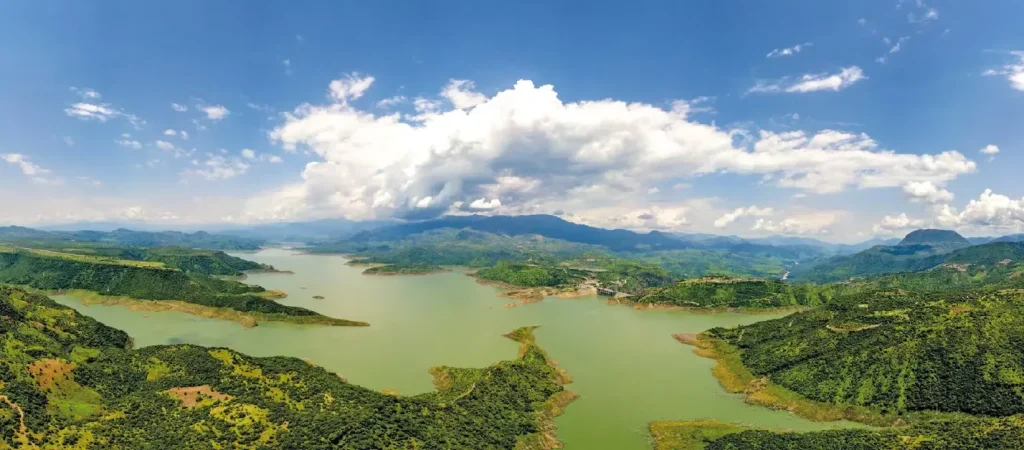
Guinea possesses the greatest hydroelectric potential in West Africa, often referred to as the “Water Tower of Africa.” However, the source of this energy is often located in the highlands, far from the coastal mining clusters and the administrative heart of Conakry. High-voltage Electric Transmission Lines are the vital links that bridge this geographical gap, ensuring that heavy industries like alumina smelting and steel manufacturing have the consistent, high-load power they require to operate at global standards.
2. Regional Integration and the WAPP
Guinea is a key player in the West African Power Pool (WAPP), a specialized agency of ECOWAS. By investing in cross-border transmission infrastructure, Guinea is not just powering itself; it is becoming a primary energy exporter to neighboring nations like Senegal, Mali, and Guinea-Bissau. For investors, this provides a diversified revenue stream that extends beyond the domestic market.
Key Pillars of Energy Infrastructure in Guinea
A modern grid requires more than just cables and pylons; it requires an integrated technological ecosystem designed for the 21st century.
1. High-Voltage Direct Current (HVDC) Technology
To move massive amounts of power over long distances with minimal loss, the implementation of HVDC technology is essential. These systems are the gold standard for connecting remote hydroelectric sites to the national grid. According to the International Energy Agency (IEA), modernizing transmission efficiency can save emerging economies billions in lost productivity.
2. Smart Grid and Digital Monitoring
As we integrate more renewable sources including solar and wind into the national mix, the grid must become “intelligent.” This involves:
- SCADA Systems: For real-time monitoring and automated load balancing.
- Fiber-Optic Integration: Many modern transmission lines in Guinea now incorporate OPGW (Optical Ground Wire), which simultaneously provides lightning protection and a high-speed data backbone for the nation’s telecommunications.
3. Substation Expansion
Every transmission line requires a sophisticated substation to step down the voltage for local distribution. This segment of the Energy Infrastructure in Guinea offers significant opportunities for engineering firms and equipment manufacturers specializing in transformers, switchgear, and protective relays.
Investment Opportunities in Grid Expansion
The expansion of Guinea’s transmission network is being driven by a combination of public-private partnerships (PPPs) and direct foreign investment.
1. The Mining Power Solution
Major mining operations, particularly in the Boké and Boffa regions, are increasingly seeking to replace expensive, carbon-heavy diesel generators with clean grid power. Private developers who can build, own, and operate “Dedicated Transmission Lines” for these anchor tenants are seeing high-margin, long-term returns on investment.
2. Rural Electrification and Distribution
While high-voltage lines form the backbone, the “last-mile” distribution to rural communities remains a high-impact area for development finance. By extending the reach of the national grid, investors are unlocking the economic potential of the SME and agribusiness sectors, creating a more resilient and inclusive national economy.
The 2026 Regulatory Landscape: Incentivizing Infrastructure
The Guinean government, through the Ministry of Energy, Hydraulics, and Hydrocarbons, has streamlined the process for infrastructure developers to ensure that Energy Infrastructure in Guinea projects are bankable and secure.
- Fiscal Incentives: Developers of strategic energy projects can access extended tax holidays and 100% duty-free importation of specialized electrical equipment and heavy machinery.
- Legal Protections: Guinea’s adherence to OHADA law provides a transparent and internationally recognized framework for contract enforcement and arbitration.
- Sovereign Guarantees: For critical transmission projects, the state often provides guarantees to back Power Purchase Agreements (PPAs) and Transmission Service Agreements (TSAs), significantly reducing the risk profile for international lenders.
How Yes! Invest Guinea Drives Your Infrastructure Project
Navigating large-scale utility projects requires deep local expertise and institutional access. At Yes! Invest Guinea, we act as your strategic partner throughout the project lifecycle:
- Project Identification: We connect you with government-approved energy master plans to identify high-priority transmission corridors.
- Regulatory Navigation: We handle the complex permitting process, from environmental impact assessments (ESIA) to securing right-of-way (ROW) agreements.
- Local Content Management: We help you build partnerships with local engineering firms, ensuring your project meets national requirements while benefiting from local logistical support.
- Institutional Liaison: We facilitate high-level coordination with the national utility company (EDG) and the Ministry of Investment, ensuring your project moves from feasibility to construction efficiently.
FAQ: Energy Infrastructure in Guinea
- Why is the expansion of transmission lines so critical for Guinea now?
With several massive hydroelectric dams coming online, the existing grid cannot handle the increased load. Expanding the transmission network is necessary to move this clean energy to the mining sectors and urban centers that need it most.
- Can private investors own transmission assets in Guinea?
Yes. The regulatory framework increasingly supports Independent Power Producers (IPPs) and private transmission developers through various PPP (Public-Private Partnership) models.
- What is the role of Guinea in the regional West African power market?
Guinea is a major energy hub within the West African Power Pool (WAPP). It is projected to be a primary exporter of surplus hydroelectric power to its neighbors, making its transmission infrastructure a regional asset.
- How does the government protect energy investments?
Investment protection is ensured through international arbitration treaties, OHADA law, and specific sovereign guarantees for strategic projects that provide stability for long-term project financing.
- How can Yes! Invest Guinea help me secure a transmission project?
We offer comprehensive consulting from site selection and regulatory permitting to facilitating your “Strategic Project” status, which unlocks essential fiscal benefits.
Conclusion: The Backbone of Guinea’s Emergence
The development of Electric Transmission Lines is the most significant infrastructure challenge and opportunity facing the Republic of Guinea today. A robust Energy Infrastructure in Guinea is the foundation upon which every other sector, from mining to manufacturing, will be built. For the global investor, this is a chance to participate in a high-yield, long-term asset class that is central to the history of West African industrialization.
The energy is there; the water is flowing. Now, we must build the highways to carry that power into the future.
Power the Future with Yes! Invest Guinea
At Yes! Invest Guinea, we turn infrastructure blueprints into industrial reality. From the first survey to the final grid injection, our team provides the local intelligence and institutional access you need to thrive.
Contact Yes! Invest Guinea today to receive our 2026 Energy & Utility Investment Prospectus.