The global energy transition has entered a phase where consistency is the ultimate commodity. While solar and wind have laid the groundwork for a greener planet, their intermittency remains a hurdle for industrial-scale baseload power. In 2026, the focus of the “Blue Economy” has shifted toward the most predictable force on Earth: the tides. For the Republic of Guinea, a nation defined by its powerful Atlantic coastline and complex estuary systems, Tidal Power Generation is no longer a futuristic concept it is an imminent industrial reality.
As coastal industrial hubs like Kamsar, Conakry, and Boké seek to decarbonize their operations, the development of Tidal Power Guinea offers a unique solution. Unlike other renewables, tides are governed by celestial mechanics, making their energy output predictable years in advance. This article explores the technical landscape of tidal energy, the specific geographical advantages of the Guinean coast, and the strategic roadmap for investors looking to pioneer West Africa’s most innovative energy sector.
The Science of Predictability: Why Tidal Energy?
Tidal energy captures the kinetic energy from the movement of water during the rise and fall of tides. Because water is roughly 830 times denser than air, a tidal turbine can generate significantly more power than a wind turbine of the same size, even at low flow speeds.
1. Reliable Baseload Potential
The greatest challenge for Guinea’s power grid is stability. Solar output drops at night, and hydroelectricity can fluctuate during the dry season. Tides, however, are constant. Investing in Tidal Power Guinea allows for a diversified energy mix where “Ocean Baseload” provides the necessary stability for heavy industries, such as bauxite refining and aluminum smelting.
2. High Energy Density and Low Visual Impact
Tidal turbines are primarily submerged, preserving the natural beauty of Guinea’s coastal landscapes a vital consideration for the growing Tourism and Hospitality sector. Furthermore, the small physical footprint of tidal arrays compared to massive solar farms makes them ideal for energy generation near densely populated coastal cities. According to the International Renewable Energy Agency (IRENA), ocean energy represents one of the most stable long-term investment profiles in the renewable sector.
Guinea’s Geographical Edge: Estuaries and Atlantic Currents
Guinea’s coastline is uniquely suited for tidal energy due to its “ripped” geography, characterized by deep estuaries and narrow channels that naturally accelerate water flow.
1. The Power of the Estuaries
Regions such as the Rio Nuñez and the Fatala River estuary act as natural “funnels.” As the tide pushes into these narrow inlets, the water velocity increases exponentially a phenomenon known as the “Venturi Effect.” These locations are prime candidates for Tidal Power Generation, allowing for the installation of tidal stream generators that require minimal civil engineering compared to traditional dams.
2. High Tidal Range
Guinea experiences a significant tidal range (the vertical difference between high and low tide). In some coastal areas, this range can exceed 4 to 5 meters. This high range is essential for “Tidal Range” technology, where small-scale barrages or lagoons can capture vast amounts of potential energy to be released through turbines during ebb and flow.
Strategic Opportunities in Tidal Energy Investment 2026
The transition to marine energy in Guinea is being driven by the need for localized, industrial-grade power solutions.
1. Integrated Port and Power Infrastructure
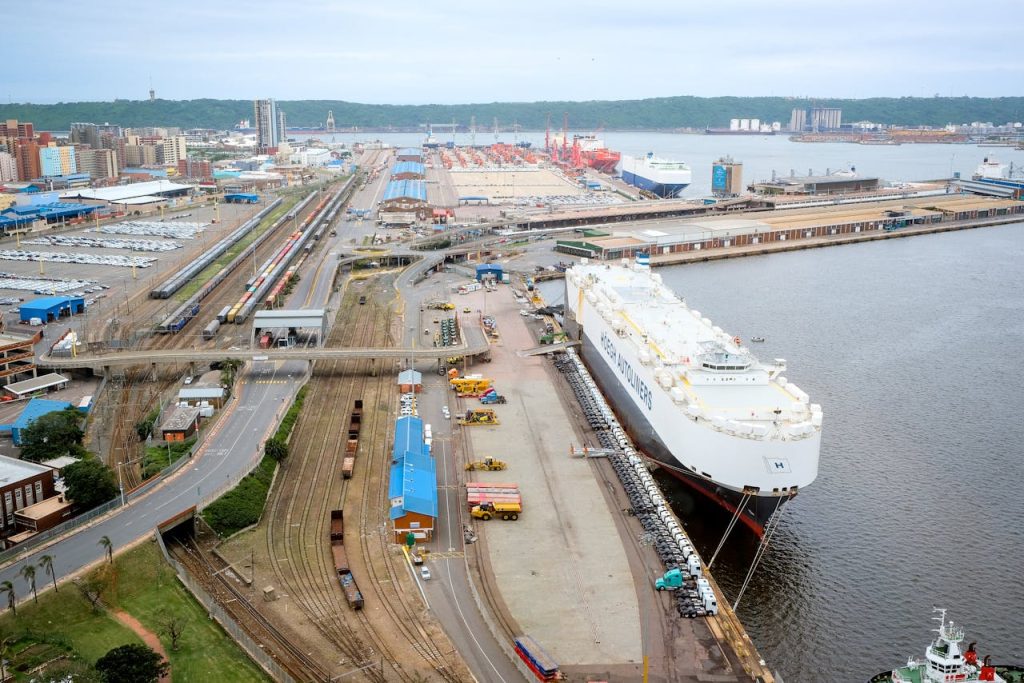
Guinea’s ports are the gateways of its economy. In 2026, the expansion of the Morebaya and Kamsar ports provides a “Dual-Use” opportunity.
- The Opportunity: Integrating tidal turbines into new breakwaters and jetty structures.
- The ROI: Ports become self-sufficient energy hubs, reducing their operational costs and qualifying for Green Infrastructure certifications that attract premium shipping lines.
2. Desalination and Hydrogen Synergy
Tidal power provides the consistent energy required for energy-intensive processes like water desalination and “Green Hydrogen” production.
- The Opportunity: Building co-located tidal power and desalination plants to provide fresh water for coastal Agro-Processing units.
- The ROI: Diversified revenue streams from both electricity sales and high-demand industrial water.
3. Coastal Protection and Energy Lagoons
As sea levels rise, Guinea is investing in coastal defense.
- The Opportunity: Constructing “Tidal Lagoons” enclosures that protect the shoreline from erosion while generating predictable electricity. This creates a high-impact ESG Investing profile that appeals to global “Blue Bond” funds.
Why Invest in Guinea’s Innovative Energy Now?
The 2026 investment climate in Guinea is specifically designed to reward pioneers in the renewable energy sector through the Invest in Guinea portal.
1. Unmatched Fiscal Incentives
The 2026 Green Energy Act provides specific benefits for “Ocean Energy” pioneers:
- Tax Holidays: Up to 12 years of corporate tax exemption for the first five commercial tidal arrays.
- Duty-Free Imports: 100% waiver on customs duties for marine-grade turbines, subsea power cables, and power conversion systems.
- Accelerated Depreciation: Allowing investors to write off capital costs faster, significantly improving the project’s Internal Rate of Return (IRR).
2. Strategic Trade and Carbon Markets
As a member of the African Continental Free Trade Area (AfCFTA), Guinea can export excess “Blue Power” to neighboring coastal nations. Furthermore, tidal projects generate high-integrity carbon credits, which in 2026 are fetching record prices on the London and Singapore Carbon Exchanges.
3. Legal Security via OHADA
For international infrastructure investors, legal certainty is paramount. Guinea’s adherence to the OHADA framework ensures that long-term energy concessions (B.O.T – Build, Operate, Transfer) are protected by standardized commercial laws and international arbitration.
Roadmap for Tidal Energy Success in Guinea
- Detailed Bathymetry and Flow Mapping: Utilizing sonar and ADCP (Acoustic Doppler Current Profilers) to identify the highest velocity “sweet spots.” Yes! Invest Guinea can assist in coordinating with the Ministry of Maritime Economy for data access.
- Environmental Impact Assessments (EIA): Ensuring that turbine placement does not interfere with local Fishing and Aquaculture or migratory marine paths. In 2026, “Sea-Friendly” turbine designs are a requirement for licensing.
- Strategic Pilot Deployment: Starting with a 2MW to 5MW “Array Pilot” to demonstrate grid synchronization before scaling to industrial 50MW+ capacities.
- Licensing via the “One-Stop Shop”: Navigating the regulatory requirements of the Ministry of Energy and the Ministry of Environment through a single, streamlined process.
FAQ: Tidal Power Guinea
- How does tidal power compare to solar in terms of cost in 2026?
While the initial CAPEX (Capital Expenditure) for tidal is higher than solar, the Levelized Cost of Energy (LCOE) is competitive due to its much higher capacity factor (up to 40-50%) and a lifespan of 25-30 years for the turbines.
- Will tidal turbines harm the local fishing industry?
No. Modern tidal turbines move slowly and are equipped with acoustic sensors to deter marine life. Furthermore, tidal arrays often act as “De Facto” marine protected areas, allowing fish stocks to regenerate by preventing large industrial trawling in the energy zone.
- Is the Atlantic coast of Guinea strong enough for tidal energy?
Absolutely. Guinea’s estuaries have some of the most consistent tidal velocities in West Africa, specifically in the northern regions near the border with Guinea-Bissau.
- Can I get financing for tidal projects from international banks?
Yes. In 2026, many Development Finance Institutions (DFIs) have specific “Blue Energy” windows that provide low-interest loans for innovative renewable projects in Africa.
- How can Yes! Invest Guinea assist my energy venture?
Yes! Invest Guinea acts as your institutional bridge. We assist in identifying prime maritime concessions, securing Legal and Regulatory Assistance, and facilitating Government and Institutional Liaison to ensure your project is integrated into the national grid plan.
Conclusion: Riding the Tide of Progress
The ocean has always been Guinea’s greatest logistical asset; in 2026, it is becoming its most innovative power source. Tidal Power Generation: Innovative Energy in Guinea represents the perfect intersection of natural gifts and technological advancement. By capturing the relentless energy of the tides, Guinea is securing a clean, sovereign, and predictable energy future.
The tide is rising for the Blue Economy. The investors who harness the Atlantic today will power the African industrial century tomorrow.
Energize Your Future with Yes! Invest Guinea
At Yes! Invest Guinea, we are the architects of your investment success. From the first flow measurement to the final grid connection, our team provides the local intelligence and institutional access you need to lead the energy revolution.
Contact Yes! Invest Guinea today to receive our 2026 Blue Economy & Tidal Energy Prospectus.