The global seafood market is facing a critical turning point in 2026. With wild capture fisheries reaching their ecological limits and global consumer demand for high-quality marine proteins rising sharply, commercial aquaculture has become the fastest-growing sector in food production. For international venture syndicates, private equity funds, and seafood conglomerates, the search for prime aquatic territory has turned heavily toward West Africa. At the absolute forefront of this blue economy transformation is the Republic of Guinea.
Featuring over 300 kilometers of pristine Atlantic coastline, a dense network of nutrient-rich mangrove estuaries, and an exceptional tropical climate, Guinea represents an ideal landscape for commercial marine cultivation. Historically overlooked in favor of heavy mineral extraction, unlocking aquaculture investment opportunities along Guinea’s coast has evolved into one of the highest-yielding, recession-proof asset frontiers in the region.
At Yes! Invest Guinea, we act as your strategic conduit and operational concierge on the ground, linking international developers with profitable marine concessions, processing zone allocations, and local supply chain networks. This comprehensive operational guide provides an analytical overview of the top marine cultivation opportunities awaiting forward-thinking global investors.
1. Prime Sub-Sectors: Navigating Guinea’s Marine Asset Pipeline
Guinea’s unique coastal geography provides a highly versatile ecosystem capable of supporting diverse, high-volume commercial aquaculture systems. Private capital can capture substantial market share across three highly lucrative marine niches.
Commercial Penaeid Shrimp and Prawn Farming
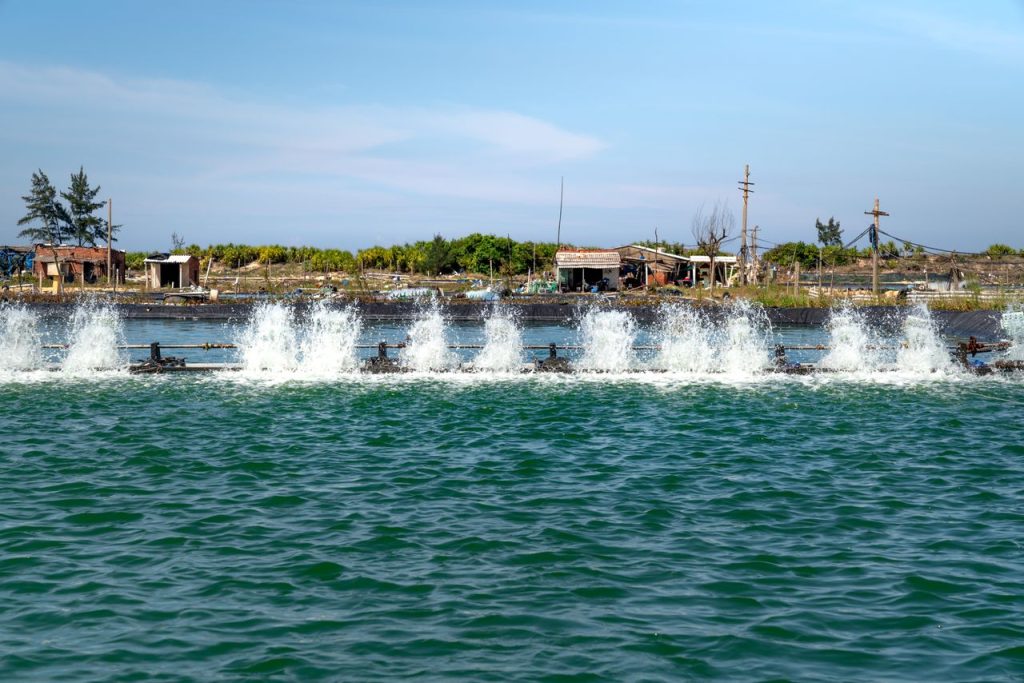
Guinea’s expansive coastal estuaries and brackish river deltas offer the exact environmental parameters including optimal salinity levels and consistent water temperatures required for high-density shrimp aquaculture, particularly the highly valued Penaeus monodon (Tiger Prawn) and Litopenaeus vannamei (Whiteleg Shrimp). By establishing modern, semi-intensive pond networks or closed-loop recirculating aquaculture systems (RAS) along the coast, investors can generate massive annual yields targeted directly at premium export markets in Europe, Asia, and North America.
Marine Finfish Cultivation in Estuarine and Open-Water Cages
The sheltered bays and deep coastal waters surrounding locations like the Loos Islands and the Camayenne peninsula present ideal conditions for commercial cage aquaculture. High-demand species such as Seabream, Grouper, and African Catfish can be cultivated at scale using modern, storm-resistant floating cage systems. Localized production allows seafood enterprises to feed the rapidly growing domestic urban centers while packaging premium fillets for tariff-free regional distribution.
Bivalve and Seaweed Farming for Sustainable Export
The nutrient-dense currents flowing along Guinea’s coastline provide an exceptional medium for low-input, high-margin extractive aquaculture. Developing long-line cultivation systems for premium oysters and mussels, alongside commercial seaweed (Eucheuma and Kappaphycus) farms, offers exceptional returns for impact investors. These sub-sectors require low early-stage capital expenditure, generate rapid harvest cycles, and align perfectly with global blue-carbon credit initiatives.
2. Tech-Driven Marine Hubs: Building the Smart Infrastructure Spine
Modern commercial aquaculture operations cannot scale or maintain strict international bio-security standards without a deep digital infrastructure spine and an absolute guarantee of uninterrupted, scalable electricity.
Automated Water Quality Monitoring and Cloud-Based ERP Platforms
With Guinea actively expanding its national fiber-optic telecommunications network, newly built coastal aquaculture installations can deploy high-speed cloud ERP systems and real-time data tracking from day one. Inshore hatcheries, feed mills, and grow-out ponds can integrate advanced IoT Guinea sensor networks directly into their water systems. This tech-driven edge allows marine operators to monitor dissolved oxygen levels, pH balances, and water temperatures automatically, adjusting feeding schedules dynamically via automated smart software to minimize operational liabilities and maximize feed conversion ratios (FCR).
Energy Sovereignty via Renewable Hybrid Microgrids
To insulate digital processing facilities, automated flash-freezing plants, and water-pumping stations completely from traditional power grid reliance, commercial marine developers are heavily adopting decentralized clean energy solutions. Seafood corporations can secure a massive competitive advantage by constructing hybrid Microgrid Systems.
By pairing high-efficiency industrial solar arrays with advanced battery energy storage systems (BESS), coastal aquaculture centers can maintain stable, uninterrupted 24/7 power. This independent energy matrix allows processing plants to run continuous freezing lines, preserving harvest freshness to meet strict global export standards regulated by the Food and Agriculture Organization (FAO).
3. Integrating Aquaculture with Local Value-Added Nut Processing
To maximize profit margins and build total supply chain resilience, forward-thinking aquaculture investors are actively aligning their marine outputs with Guinea’s booming downstream food processing sectors.
Constructing Integrated Seafood Processing Units
Rather than shipping raw, unrefined marine catches to distant international facilities for basic sorting and packaging, modern developers are constructing state-of-the-art processing factories directly next to their coastal concessions. This localization allows companies to produce value-added seafood lines that strictly comply with international quality certifications regulated by the International Organization for Standardization (ISO).
Furthermore, the byproduct waste from coastal fish farms can be integrated directly with domestic Nut Processing Units and agricultural centers to produce organic fertilizers and high-protein local animal feeds. This circular economy model dramatically reduces local input costs, making Guinea the most cost-effective base for maritime food production in West Africa.
4. Legal Certainty: Navigating Protections under the OHADA Framework
A primary requirement for international corporate boards, seafood compliance managers, and institutional risk officers looking to deploy large-scale capital into frontier marine spaces is absolute legal safety and predictability. Guinea answers this demand through its strict integration into unified commercial codes.
Standardized Protections under OHADA
Guinea operates as an active member of the OHADA Law framework (Organization for the Harmonization of Business Law in Africa), a highly unified commercial legal code implemented across 17 African nations. This civil law system offers exceptional predictability. It guarantees that long-term maritime concessions, coastal land leases (emphyteutic leases up to 99 years), corporate joint ventures, and asset purchases are legally secure and fully recognized by international commercial arbitration courts, mitigating standard legal risks.
Exclusive Incentives Under the 2026 Investment Code
Foreign enterprises registering commercial aquaculture, hatchery, or seafood processing operations through the Agency for the Promotion of Private Investments (APIP) gain access to an aggressive suite of industrial incentives under the updated Investment Code:
- Tax Holidays: A complete 8 to 10-year exemption from corporate income tax for aquaculture and infrastructure projects established outside the primary capital zone.
- Customs Duty Waivers: 0% import duties and full VAT exemptions on all specialized aquaculture hardware, water-filtration systems, automated feeding machinery, and laboratory equipment during the initial construction and setup phase.
- Capital Protection: Full legal rights for international corporations to freely repatriate 100% of profits, company dividends, and operational capital in foreign currency back to their home jurisdictions.
5. Frequently Asked Questions (FAQ)
- Why is commercial aquaculture highly strategic in Guinea in 2026?
Guinea possesses an unmatched 300km coastline, pristine estuarine waters, and a tropical climate ideal for rapid seafood growth cycles. The sector is heavily backed by government incentives to diversify the national economy away from basic raw mineral extraction.
- Can an international investor maintain 100% ownership of an aquaculture farm in Guinea?
Yes. Under the unified OHADA legal code and Guinea’s open commercial framework, foreign investors are legally permitted to establish, manage, and maintain 100% corporate ownership of their local marine or processing subsidiaries (such as a SARL or SA) without requiring a mandatory local partner.
- What international trade frameworks benefit seafood exporters operating in Guinea?
Entities establishing operations within Guinea gain tariff-free market access across 54 African nations via the African Continental Free Trade Area (AfCFTA) framework. For international shipping, processed seafood lines also benefit from duty-free access to European markets through the Everything But Arms (EBA) initiative.
- How does Guinea manage power reliability for coastal processing plants?
While large-scale hydroelectric projects supply baseline power to major cities, remote processing hubs and coastal aquaculture centers increasingly deploy decentralized hybrid Microgrid Systems. These smart grids combine solar arrays with advanced battery storage to manage electrical loads in real-time.
- How can Yes! Invest Guinea assist international aquaculture developers?
We serve as your comprehensive institutional concierge on the ground. Our team handles Company Registration in Guinea, provides elite Legal and Regulatory Assistance, navigates bureaucratic processes via direct Government and Institutional Liaison, and manages local operations to ensure your project runs with maximum resilience.
Conclusion: Capitalizing on the Blue Frontier
The strategic window of opportunity to capitalize on the momentum of Aquaculture Investment Opportunities Along Guinea’s Coastline is wide open in 2026. By pairing advanced international marine engineering standards and automated tracking frameworks with Guinea’s immense natural coastal wealth, modernized shipping lines, and secure legal protections, forward-thinking corporate developers can secure an unshakeable market position in West Africa.
Scale Your Marine Project with Yes! Invest Guinea
At Yes! Invest Guinea, we deliver the critical data, verified institutional networks, and legal safety rails required to transition your commercial seafood project seamlessly from a blueprint into a highly profitable operational reality.
Contact our Marine Infrastructure Investment Desk today to receive your 2026