The global reallocation of industrial capital in 2026 has turned the Republic of Guinea into one of West Africa’s most dynamic economic frontiers. Driven by the historic execution of the “Simandou 2040” national blueprint, multi-billion-dollar investments are actively flowing into heavy civil engineering, bauxite refining, maritime logistics, and sustainable power grids. However, this massive industrial expansion has revealed a critical secondary demand: the urgent need for a highly skilled, technically competent local workforce capable of managing automated infrastructure and corporate ecosystems.
Consequently, the focus of global venture syndicates, impact funds, and international academic networks has turned toward social infrastructure. Unlocking education investment opportunities in the country has evolved from a developmental goal into an incredibly lucrative commercial strategy. As the domestic middle class expands and international expatriate communities flood into industrial centers like Conakry, Kamsar, and Nzérékoré, the public sector can no longer satisfy the demand for high-tier schooling. The market for premium, localized learning institutions is wide open.
At Yes! Invest Guinea, we act as your strategic conduit and operational concierge on the ground, linking international developers with profitable concession allocations, public-private partnerships (PPPs), and corporate training syndicates. This extensive guide provides an analytical overview of the top private education investment opportunities in Guinea for forward-thinking global investors.
1. Primary Market Segments: Navigating the Private Education Boom
The structural shift toward localized high-value manufacturing has fundamentally altered what Guinean families and corporate employers demand from learning institutions. Private capital can capture significant market share across three main academic niches.
Technical and Vocational Education and Training (TVET)
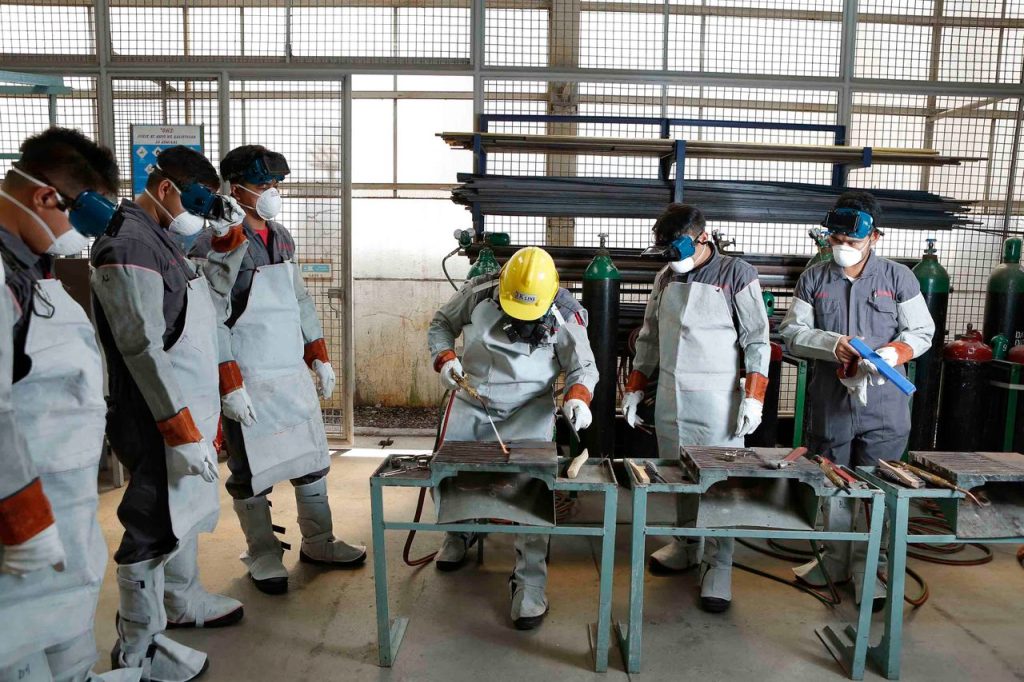
The baseline of Guinea’s economic boom requires an absolute abundance of specialized technicians. Heavy mining networks, automated smelting plants, and modern transport lines require an immediate supply of qualified mechanics, automated system operators, electrical engineers, and logistics managers.
Investing in state-of-the-art Technical and Vocational Hubs offers exceptional, recession-proof returns. International operators can partner with multinational engineering firms to design specialized curriculum tracks, ensuring that students step straight from the classroom into high-paying corporate roles.
K-12 International Schools and Expatriate Academic Hubs
The influx of international executives, mining engineers, diplomatic missions, and corporate consultants has triggered an acute deficit in Grade-A international schools. Existing facilities in Conakry are operating at peak capacity, often maintaining long waiting lists.
Developing international academic hubs that offer globally recognized curricula such as the International Baccalaureate (IB) or Cambridge Assessment International Education presents high-yielding opportunities for real estate and academic investors. These institutions command premium tuition rates, offering predictable, long-term rental yields and asset appreciation.
Advanced Digital Skills and Corporate EdTech Spines
Modern business operations rely completely on software connectivity, cloud data systems, and real-time operational analytics. To support this digital transition, a booming market has emerged for specialized coding bootcamps, executive management institutes, and corporate training centers.
Private developers can establish localized EdTech networks that offer specialized certifications in business administration, cloud computing, and financial compliance, utilizing advanced cloud learning platforms to upskill local management teams efficiently.
2. Tech-Driven Academic Campuses: Building the Smart Infrastructure Spine
Modern private schools and vocational hubs require a deep digital infrastructure spine and an absolute guarantee of uninterrupted, scalable electricity to remain competitive.
Smart Classrooms and Cloud-Based Learning Management Systems
With Guinea actively expanding its 12,000 km national fiber-optic telecommunications backbone, newly built private campuses can deploy high-speed cloud ERP systems and interactive e-learning toolsets from day one. Classrooms and training workshops can integrate advanced IoT Guinea sensor networks directly into their facilities. This tech-driven edge allows educational operators to manage campus resources dynamically, track student attendance automatically, and provide remote digital training modules seamlessly from a centralized dashboard.
Energy Sovereignty via Renewable Hybrid Microgrids
To insulate digital laboratories, online examination testing centers, and campus facilities completely from traditional power grid reliance, private education developers are heavily adopting decentralized clean energy solutions. Green-tech providers can secure significant competitive advantages by constructing hybrid Microgrid Systems.
By pairing high-efficiency solar arrays with advanced battery energy storage systems (BESS), educational campuses can maintain stable, uninterrupted 24/7 power, allowing schools to lower operational costs while shrinking their carbon footprints to meet global sustainability parameters regulated by the International Energy Agency (IEA).
3. Legal Certainty: Navigating Protections under the OHADA Framework
A primary requirement for international educational boards, private equity compliance officers, and institutional legal counsels looking to deploy large-scale capital into frontier social infrastructure is absolute legal safety and predictability. Guinea answers this demand through its strict integration into unified commercial codes.
Standardized Protections under OHADA
Guinea operates as an active member of the OHADA Law framework (Organization for the Harmonization of Business Law in Africa), a highly unified commercial legal code implemented across 17 African nations. This civil law system offers exceptional predictability. It guarantees that long-term land concessions (emphyteutic leases up to 99 years), corporate joint ventures, asset purchases, and intellectual property rights are legally secure and fully recognized by international commercial arbitration courts, mitigating standard legal risks.
Exclusive Incentives Under the 2026 Investment Code
Foreign enterprises registering academic, vocational, or corporate training operations through the Agency for the Promotion of Private Investments (APIP) gain access to an aggressive suite of industrial incentives under the updated Investment Code:
- Tax Holidays: A complete 8 to 10-year exemption from corporate income tax for educational and infrastructure projects established outside the capital city zone.
- Customs Duty Waivers: 0% import duties and full VAT exemptions on all specialized educational hardware, scientific laboratory kits, technological machinery, and engineering equipment during the initial construction and setup phase.
- Capital Protection: Full legal rights for international corporations to freely repatriate 100% of profits, company dividends, and operational capital in foreign currency back to their home jurisdictions.
4. Agribusiness and Nut Processing: Aligning Education with Industry
To maximize the social and economic impact of private training centers, forward-thinking educational investors are actively aligning vocational curriculum structures with Guinea’s other high-growth sectors, notably advanced downstream agriculture.
Technical Training for High-Yield Agro-Industrial Parks
Guinea features over 6 million hectares of ultra-fertile arable land and high annual rainfall. To help shift the local agricultural sector from raw commodity shipping to value addition, international agribusiness syndicates are financing integrated Nut Processing Units directly at the crop source.
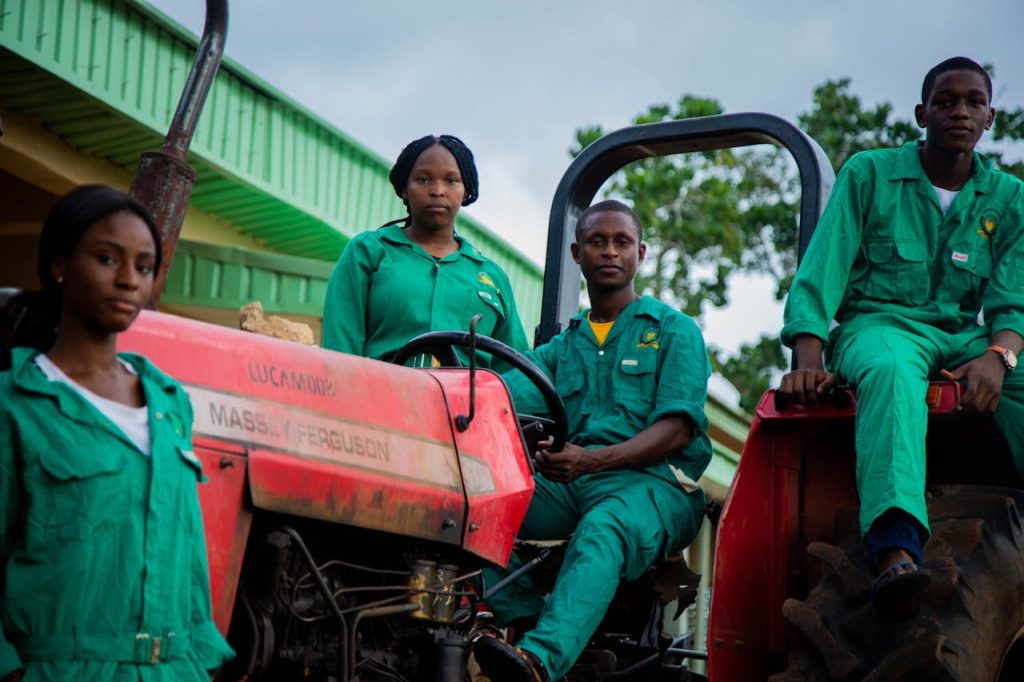
Private vocational schools that establish specialized training tracks in mechanized agriculture, quality control, and industrial processing create a highly sought-after workforce. Graduates who understand how to process fresh cashews and groundnuts locally to meet global quality certifications regulated by the International Organization for Standardization (ISO) will immediately feed the booming export sectors, creating a continuous demand for certified private training programs.
5. Frequently Asked Questions (FAQ)
- Why is private education an attractive investment sector in Guinea in 2026?
The massive industrial boom has created an unprecedented shortage of skilled local technicians, corporate administrators, and engineers. Private academic institutions, international schools, and TVET hubs are urgently required to fill this gap, offering investors a highly profitable market with premium tuition yields.
- Can an international investor maintain 100% ownership of a private school in Guinea?
Yes. Under the unified OHADA legal code and Guinea’s open commercial framework, foreign investors are legally permitted to establish, manage, and maintain 100% corporate ownership of their local academic or corporate subsidiaries (such as a SARL or SA) without requiring a mandatory local partner.
- What international trade frameworks benefit educational service providers in Guinea?
Entities establishing operations within Guinea gain tariff-free market access across 54 African nations via the African Continental Free Trade Area (AfCFTA) framework, significantly lowering the cost of expanding educational programs and remote training services across borders.
- How does Guinea manage power reliability for modern digital learning centers?
While large-scale hydroelectric projects supply baseline power to major cities, remote processing hubs and smart campuses increasingly deploy decentralized hybrid Microgrid Systems. These smart grids combine solar arrays with advanced battery storage to manage electrical loads in real-time.
- How can Yes! Invest Guinea assist international education developers?
We serve as your comprehensive institutional concierge on the ground. Our team handles Company Registration in Guinea, provides elite Legal and Regulatory Assistance, navigates bureaucratic processes via direct Government and Institutional Liaison, and manages local operations to ensure your project runs with maximum resilience.
Conclusion: Empowering Growth with Yes! Invest Guinea
The strategic window of opportunity to capitalize on the momentum of Top Private Education Investment Opportunities in Guinea is wide open in 2026. By pairing advanced international academic standards and technological vocational frameworks with Guinea’s immense economic growth, modernized transport corridors, and secure legal protections, forward-thinking corporate developers can secure an unshakeable market position in West Africa.
Scale Your Academic Project with Yes! Invest Guinea
At Yes! Invest Guinea, we deliver the critical data, verified institutional networks, and legal safety rails required to transition your commercial educational project seamlessly from a blueprint into a highly profitable operational reality.
Contact our Social Infrastructure Investment Desk today to receive your 2026