The Republic of Guinea is globally renowned as a bauxite titan and the home of the world’s most ambitious iron ore project at Simandou. However, as the nation enters a transformative era of industrialization in 2026, the spotlight is shifting toward a more diverse portfolio of high-value commodities. Industrial Minerals in Guinea represent the next frontier for savvy investors looking to diversify beyond traditional extraction into the essential building blocks of the modern global economy.
For institutional investors and junior exploration firms, the untapped potential of base metals and industrial minerals—ranging from lead and zinc to mineral sands offers a unique “early-mover” advantage. This article explores why Guinea’s geological richness is poised to evolve into a multifaceted industrial powerhouse and how Yes! Invest Guinea can guide your capital to the most strategic opportunities in this emerging landscape.
The Geological Pivot: Diversifying Beyond Bauxite and Iron
While bauxite and iron ore currently dominate Guinea’s foreign exchange, the country’s geological framework is significantly more complex. The Birimian and Proterozoic belts that underpin Guinea’s landmass are known to host a variety of base metals and industrial minerals that remain largely underexplored.
1. Base Metals: Lead, Zinc, and Copper
The global energy transition has created a supply crunch for base metals. Essential for renewable energy infrastructure and battery manufacturing, lead, zinc, and copper are in high demand. Guinea possesses several known anomalies for these metals. By integrating these deposits into the national infrastructure corridors currently being built for iron ore, the logistical barriers to entry are rapidly diminishing.
2. Mineral Sands and Rare Earth Elements
Guinea’s extensive coastline is not just for shipping; it is a repository for valuable mineral sands. Deposits of ilmenite, rutile, and zircon offer significant potential for the manufacturing of pigments, ceramics, and advanced electronics. Furthermore, early prospecting suggests prospects for rare earth elements the “vitamins” of the tech age which are critical for high-tech industrial applications.
Why Guinea’s Infrastructure is a Game-Changer
Historically, the “Industrial Mineral” sector in Guinea faced a major hurdle: logistics. That narrative is being rewritten in 2026.
1. The “Piggyback” Logistics Strategy
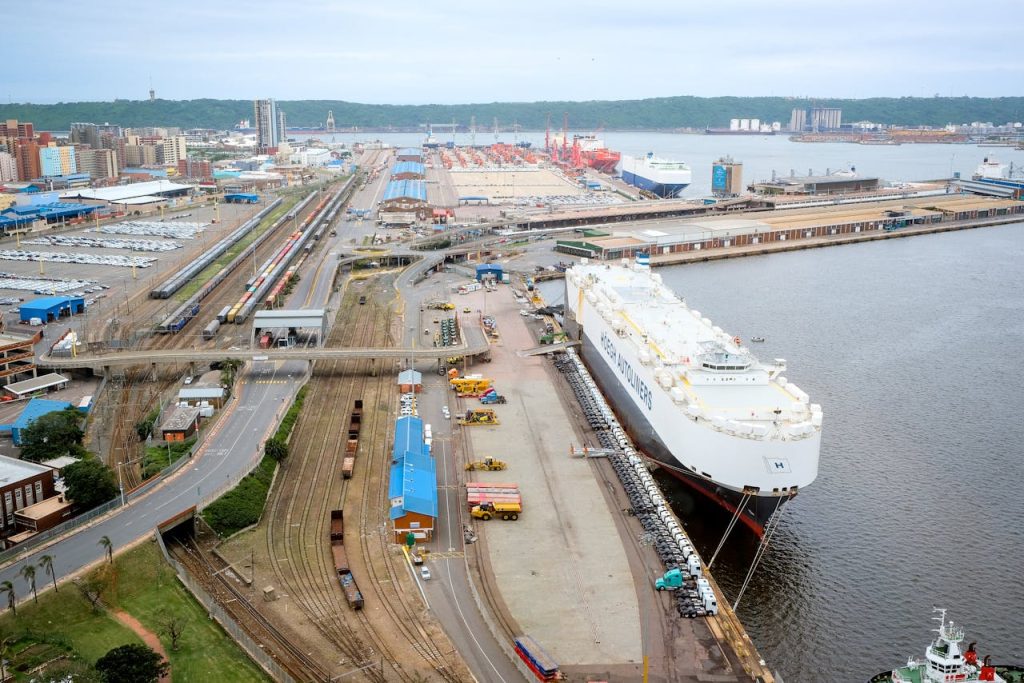
The massive investment in the Trans-Guinean Railway and deep-water ports, initially championed by the iron ore sector, is creating a “multi-user” logistics backbone. Industrial mineral projects located along or near these corridors can significantly reduce their CAPEX, benefiting from the heavy-duty infrastructure originally designed for bulk commodities.
2. Energy and Value Addition
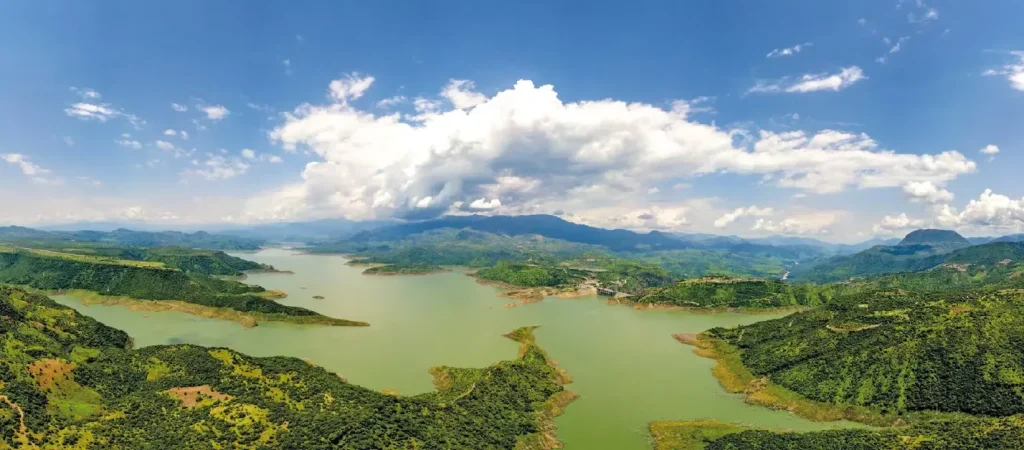
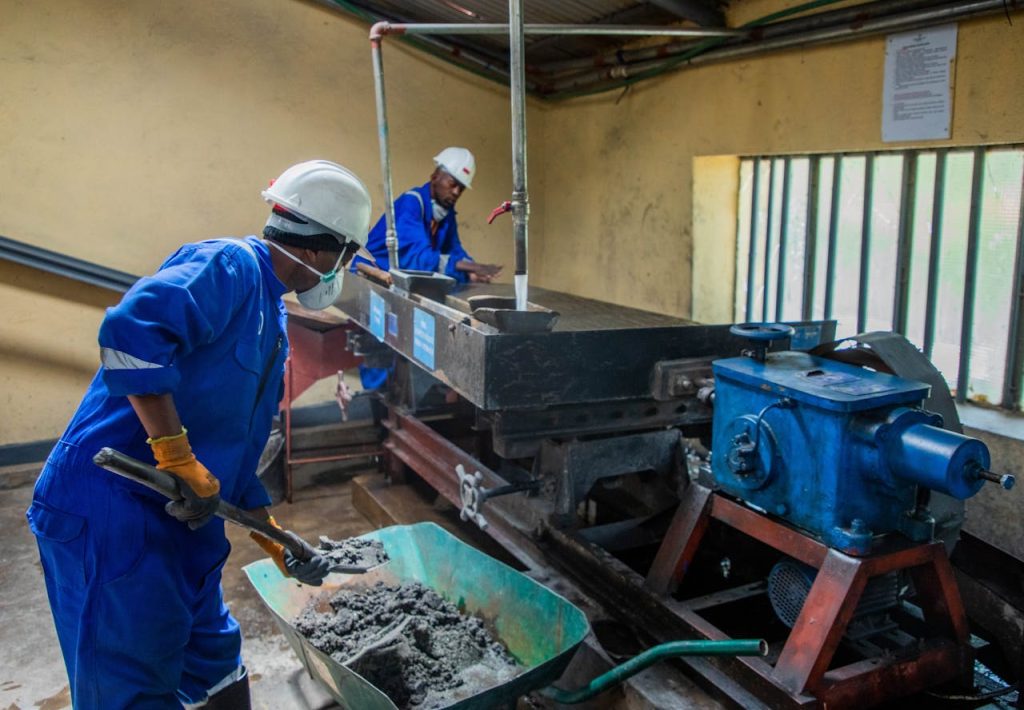
As Guinea strengthens its position as the “Water Tower of West Africa,” the development of new hydroelectric capacity is key. The availability of reliable, affordable power is the primary enabler for moving from raw mineral extraction to downstream processing. Capturing a larger portion of the value chain within Guinea is a top priority for the government, and investors who commit to local beneficiation will find a highly receptive regulatory environment.
The Regulatory Framework: A Pro-Investment Climate
Guinea has proactively updated its mining policies to attract diversified investment. For companies looking at Industrial Minerals in Guinea, the 2026 investment landscape is built on three pillars:
- Transparency and Security: Through the adoption of OHADA-compliant legal standards, Guinea ensures that concession agreements and property rights are transparent and internationally enforceable.
- Fiscal Incentives: The government offers specific incentives for mineral exploration and projects that commit to the local processing of industrial minerals, including extended tax holidays and equipment import waivers.
- Collaborative Liaison: Agencies like APIP (the national investment promotion agency) provide a “One-Stop Shop” to accelerate permitting, ensuring that your exploration or mining venture moves from feasibility to operation with minimal administrative friction.
How Yes! Invest Guinea Facilitates Your Success
Navigating a complex mining jurisdiction like Guinea requires more than just capital; it requires deep local intelligence. At Yes! Invest Guinea, we specialize in bridging the gap between global investors and the Guinean industrial landscape.
- Concession Identification: We help you navigate the national geological database to identify high-potential mineral sand, lead, and zinc zones.
- Regulatory Navigation: From securing exploration permits to managing environmental impact assessments, we handle the bureaucratic requirements.
- Local Content Compliance: We guide your SME and Local Content integration, ensuring your project meets government mandates while fostering community support.
- Strategic Liaison: We act as your primary Government and Institutional Liaison, ensuring you have access to the right stakeholders for long-term project stability.
FAQ: Industrial Minerals in Guinea
- Is lead mining currently active in Guinea?
While bauxite and iron are the primary industrial drivers, lead and zinc are recognized as significant base metal prospects. The government is currently encouraging exploration and feasibility studies for these commodities in previously underexplored Birimian zones.
- What is the advantage of investing in industrial minerals now?
The current infrastructure boom railways and ports drastically lowers the cost of entry for base metals and industrial minerals. Investors entering now gain first-mover advantages before these corridors reach full capacity.
- Does Guinea provide tax incentives for downstream processing?
Yes. Projects that commit to processing ore within Guinea (beneficiation) are eligible for substantial tax holidays and reduced royalty rates, aligning with the government’s long-term industrialization goals.
- How does Guinea manage environmental risks for new mining projects?
Guinea follows international ESG and EITI standards. Projects that demonstrate sustainable practices and community development are fast-tracked and prioritized for infrastructure support.
- How can Yes! Invest Guinea assist my investment?
We offer end-to-end consulting from identifying land and navigating OHADA laws to facilitating the official “Strategic Project” status for your venture, ensuring all fiscal incentives are fully utilized.
Conclusion: Seizing the Opportunity
Guinea is at the threshold of an industrial evolution. While bauxite and iron provide the foundation, Industrial Minerals in Guinea including lead, zinc, and mineral sands are the future of the nation’s diversified mineral economy. For investors with a long-term horizon, Guinea offers a rare combination of geological prospectivity, a maturing infrastructure backbone, and a proactive government eager to partner with the right operators.
The future of African mineral production is being written in Guinea today. Don’t just watch the industry grow; be the one to define it.
Partner for Success with Yes! Invest Guinea
At Yes! Invest Guinea, we turn geological potential into high-value industrial reality. From the first exploration permit to the final product shipment, our team provides the local intelligence and institutional access you need to thrive.
Contact Yes! Invest Guinea today to receive our 2026 Mineral Diversification & Industrial Outlook Report