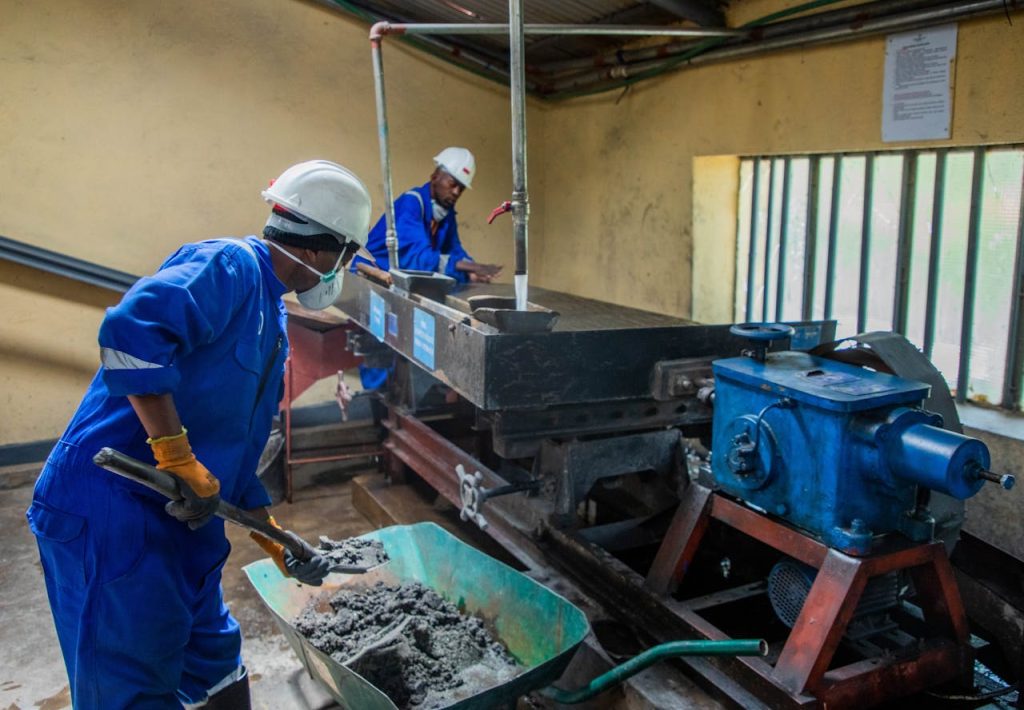
The global race for industrial resource security and diversified supply chains has reached an unprecedented peak in 2026. As corporate conglomerates, private equity firms, and emerging technology developers actively target high-growth markets, West Africa has firmly established itself as a premier destination for foreign direct investment (FDI). At the absolute center of this economic surge is the Republic of Guinea. Blessed with the world’s densest concentration of high-grade bauxite, multi-billion-dollar iron ore developments like the Simandou corridor, and immense river networks, Guinea has evolved into a powerhouse for heavy mining, renewable energy microgrids, and automated logistics.
However, for international corporate boards, sovereign financial syndicates, and expanding technology enterprises, capitalizing on these boundless macro frontiers requires a reliable, compliant, and legally airtight foundation. Every successful cross-border expansion project begins at the exact same entry point: establishing a local corporate entity. Navigating company registration in Guinea seamlessly allows foreign enterprises to deploy operational capital, secure long-term asset concessions, and hire specialized engineering workforces under total state protection.
At Yes! Invest Guinea, we serve as your premier institutional concierge and administrative bridge on the ground. Driven by the digitized mandates of the updated 2026 Investment Code, this comprehensive guide provides corporate decision-makers with an analytical roadmap to execute a fast-track corporate setup with absolute compliance.
1. Choosing the Right Corporate Structure Under OHADA Law
A primary requirement for multinational corporate legal teams and international risk compliance officers expanding into West Africa is absolute structural predictability. Guinea provides this safety rail through its strict integration into unified commercial codes.
Standardized Company Formats for Foreign Capital
Guinea operates as a core member of the OHADA Law framework, a highly unified commercial legal system implemented across 17 African nations. This civil law matrix ensures that corporate joint ventures, asset acquisitions, and international shareholder agreements are globally recognized and legally binding. For international investors, the OHADA framework provides two primary corporate structures:
- Société à Responsabilité Limitée (SARL): This structure functions similarly to a Limited Liability Company (LLC). It is highly favored by small-to-medium enterprises, tech startups, and independent consulting groups. A SARL offers exceptional flexibility, requires low minimum share capital, and completely insulates shareholders’ personal or parent assets from local operational liabilities.
- Société Anonyme (SA): This format operates as a Public Limited Company (PLC). It is the mandatory structural choice for large-scale engineering, procurement, and construction (EPC) firms, multi-national mining consortia, and utility providers looking to manage major public-private partnerships (PPPs) or secure long-term, multi-million-dollar land concessions. An SA structure enables complex corporate governance, including structured boards of directors and independent auditor oversight.
Maintaining 100% Foreign Corporate Ownership
One of the most competitive pro-market aspects of Guinea’s legal architecture is its open corporate ownership policy. Under standard OHADA regulations and Guinea’s pro-enterprise investment codes, international entities are legally permitted to establish, manage, and maintain 100% corporate ownership of their local subsidiaries. There are zero mandatory requirements to allocate equity, voting shares, or board seats to local partners across the vast majority of technological, manufacturing, and commercial service sectors, ensuring foreign enterprises maintain total control over their intellectual property and capital structures.
2. Step-by-Step Roadmap to a Fast-Track Corporate Setup
Driven by nationwide administrative modernization projects in 2026, the historical bureaucratic friction traditionally associated with West African market entry has been thoroughly eliminated. The official incorporation workflow has been consolidated into a streamlined, highly digitized process managed via the Agency for the Promotion of Private Investments (APIP).
Step 1: Document Legalization and Notarization
Before initiating local filings, the expanding enterprise must compile its core parent documentation. This includes notarized board resolutions authorizing the West African expansion, certified copies of articles of incorporation, and clear identification or passport records of the designated local managing directors. These corporate documents must be translated into French the official administrative language of Guinea by a certified translator and authenticated by relevant consular channels.
Step 2: Depositing Share Capital and Securing Bank Records
Once the preliminary documentation is prepared, the incoming corporation must select a local commercial banking institution to deposit its initial share capital. In 2026, Guinea’s banking landscape features highly modernized options, including advanced digital-first institutions introduced by major regional syndicates. The designated capital must be frozen temporarily in a specialized corporate account. The bank then issues an official capital deposit certificate, which is a mandatory prerequisite for final legal registration.
Step 3: Executing the APIP One-Stop Shop Filing
The core of the fast-track workflow takes place at the APIP “Guichet Unique” (One-Stop Shop) in Conakry. This centralized administrative office has completely digitized its systems, allowing registered investment facilitators to submit applications efficiently. Through a single consolidated filing, APIP coordinates across multiple state organs to issue your essential operational credentials simultaneously:
- Registre du Commerce et du Crédit Mobilier (RCCM): Your official commercial registration number under the global OHADA registry.
- Numéro d’Identification Fiscal (NIF): Your localized corporate tax identity code, vital for executing commercial transactions and navigating customs.
- Social Security & Labor Enrolment: Immediate integration with national labor registries, allowing your HR departments to manage payroll and local employment contracts cleanly.
3. Industrial Incentives and Tax Waivers Under the 2026 Investment Code
Registering a company is not merely a compliance checking box; it is the fundamental mechanism required to unlock a competitive suite of industrial incentives designed by the state to attract global capital.
Accessing Long-Term Corporate Tax Holidays
To encourage industrial decentralization and stimulate manufacturing outside the capital zone, the updated 2026 Investment Code offers aggressive tax relief packages. Foreign enterprises that register local entities and establish processing plants, automated assembly hubs, or mechanized agribusiness units outside of Conakry gain access to a complete 8 to 10-year holiday from corporate income tax. This fiscal cushion allows expanding firms to maximize cash flow and reinvest early-stage profits directly into scaling their local infrastructure.
Complete Customs Duty and VAT Waivers
For infrastructure developers, mining explorers, and clean-tech providers, importing heavy hardware, machinery, and precision electronic components represents a major early-stage capital expense. By routing procurement through a legally registered Guinean corporate entity registered with APIP, companies can secure 0% import duties and full VAT exemptions on all specialized heavy machinery, agritech equipment, and engineering hardware required during the primary project construction and setup phase, matching international efficiency standards monitored by organizations like the World Bank.
4. Smart Technology Integration: Powering Automated Corporate Dashboards
Modern multi-national operations require seamless, remote data visibility. Establishing a corporate entity in Guinea in 2026 gives businesses immediate access to a rapidly expanding digital ecosystem.
Deploying IoT and Cloud ERP Architectures
With Guinea actively rolling out its 12,000 km national fiber-optic telecommunications backbone, newly registered corporations can deploy high-speed cloud ERP software and automated project tracking from day one. Manufacturing setups and assembly hubs can integrate advanced IoT Guinea sensor networks directly into their local facilities. This tech-driven edge allows international management teams to monitor factory performance, track raw material supplies, and audit local operational metrics in real-time from their global headquarters.
Securing 24/7 Power via Renewable Microgrids
To insulate corporate offices, data center installations, and automated assembly plants completely from traditional grid reliance, expanding firms are heavily adopting decentralized clean energy solutions. Tech-driven enterprises are successfully deploying hybrid Microgrid Systems that pair high-efficiency solar arrays with advanced battery energy storage systems (BESS). These smart microgrids utilize intelligent power-load software to ensure stable, uninterrupted 24/7 power, allowing corporations to run continuous assembly lines while drastically lowering their corporate carbon footprint to match benchmarks set by the International Energy Agency (IEA).
5. Frequently Asked Questions (FAQ)
- How long does the company registration process take in Guinea in 2026?
Thanks to the fully digitized “One-Stop Shop” system managed by APIP, the complete corporate incorporation workflow including securing your commercial registry (RCCM), corporate Tax ID (NIF), and standard labor enrollments takes approximately 3 to 5 business days, provided all notarized documentation is submitted correctly.
- What is the minimum share capital required to register a company in Guinea?
For a standard Limited Liability Company (SARL), the minimum share capital required under updated regulations is nominal, allowing startups and advisory firms to incorporate with low early-stage friction. For a Public Limited Company (SA), the minimum capital requirement is structurally higher, reflecting its capacity to manage major infrastructure and mining concessions.
- Can a foreign corporation freely repatriate its operational profits from Guinea?
Yes. Guinea’s updated Investment Code provides explicit, clause-by-clause legal protections guaranteeing that international corporations maintain full legal rights to freely repatriate 100% of their operational profits, corporate dividends, and residual investment capital in foreign currencies back to their home jurisdictions.
- Is a local resident partner mandatory to complete company registration?
No. Under the unified OHADA legal code and Guinea’s open investment policies, international investors can maintain 100% sole corporate ownership of their subsidiaries. Directors and shareholders can be entirely of foreign nationality and reside outside of Guinea.
- How can Yes! Invest Guinea assist our corporate expansion team?
We operate as your comprehensive institutional concierge on the ground. Our specialized desks handle complete Company Registration in Guinea, provide elite Legal and Regulatory Assistance, manage complex Government and Institutional Liaison channels, and facilitate local Financial and Administrative Services to ensure your back-office runs with maximum operational resilience.
Conclusion: Seizing the Frontier Advantage
The window of opportunity to capitalize on West Africa’s primary industrial growth node is wide open in 2026. By matching your advanced corporate capabilities, industrial technologies, and investment capital with Guinea’s unparalleled natural wealth, modernized infrastructure spines, and predictable legal frameworks, your business can secure an unshakeable, future-proof market position.
Launch Your Guinean Enterprise with Yes! Invest Guinea
At Yes! Invest Guinea, we don’t just explain the regulatory environment we actively manage the entire corporate lifecycle for you. Our direct access to institutional networks, clause-by-clause legal protections, and executive contacts ensure your business transitions seamlessly from a blueprint into a highly profitable operational reality.