The Republic of Guinea is currently witnessing an unprecedented industrial expansion. As the nation solidifies its position as a global leader in bauxite exports and prepares for the historic Simandou iron ore production, a critical gap has emerged in the value chain: the need for integrated, high-efficiency Logistics Parks Guinea. In 2026, the shift from raw extraction to value-added processing necessitates a sophisticated “hub-and-spoke” distribution model. For global investors and developers, Logistics Parks in Guinea: Industrial Real Estate Development represents the most strategic entry point into the West African trade corridor.
At Yes! Invest Guinea, we recognize that modern industry cannot thrive on minerals alone; it requires the physical infrastructure to move, store, and manage goods with precision. This article explores why industrial real estate is the “new gold” in Guinea, the strategic corridors driving demand, and the fiscal incentives making 2026 the ideal time to deploy capital into Guinean logistics hubs.
The Industrial Real Estate Revolution: Why Now?
For decades, logistics in the region were fragmented. Today, the convergence of massive infrastructure projects and pro-business reforms has created a perfect environment for centralized logistics parks.
1. The Simandou Effect and Multi-User Infrastructure
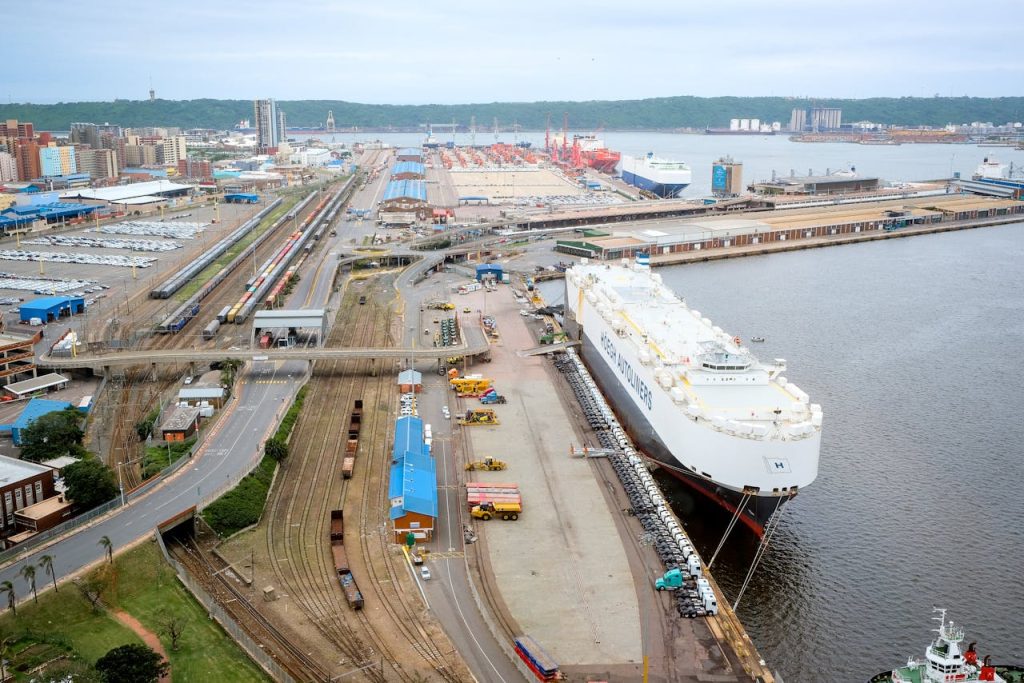
The development of the Trans-Guinean Railway and the Morebaya deep-water port has created a 600km industrial spine across the country. These are no longer just “mining tracks”; they are multi-user corridors designed to facilitate general trade. According to the African Development Bank (AfDB), integrated logistics clusters can reduce operational costs for inland businesses by up to 30%, making Guinean exports more competitive on the global stage.
2. Post-Pandemic Supply Chain Resilience
Global manufacturers are moving away from “Just-in-Time” to “Just-in-Case” inventory strategies. In 2026, Guinea is being positioned as a regional storage hub for West Africa. By establishing Logistics Parks Guinea near major maritime gateways, investors are providing the “Safety Stock” capacity that multinational firms require to hedge against global supply chain disruptions.
Strategic Locations for Logistics Development
The success of Industrial Real Estate Development in Guinea is dictated by proximity to transport nodes. Three primary zones have emerged as “High-Yield” corridors:
1. The Conakry-Kamsar Maritime Axis
As the primary gateways for bauxite and general cargo, the coastal regions between Conakry and Kamsar are in desperate need of Grade-A warehousing.
- The Opportunity: Development of container freight stations (CFS) and bonded warehouses.
- The ROI: High occupancy rates driven by import-export firms and industrial suppliers who require rapid access to the Port of Conakry.
2. The Upper Guinea Inland Hubs (Kankan and Kouroussa)
Upper Guinea is the gateway to the Sahel. As the Trans-Guinean rail network expands, Kankan is evolving into a dry port and a regional distribution center for landlocked neighbors like Mali.
- The Opportunity: Bulk storage for agricultural products like Sesame Seed Farming and mineral concentrates.
- The Benefit: Capturing the transit trade of the ECOWAS region.
3. The Forest Region Industrial Corridor
Near the iron ore deposits of Simandou and Nimba, the demand for “heavy-duty” logistics is soaring.
- The Opportunity: Specialized storage for mining spare parts, explosives, and heavy machinery maintenance workshops.
- The Synergy: Co-locating logistics with Gold Smelting and Refining units to streamline the metallurgical value chain.
Technical Requirements for Grade-A Logistics Parks
In 2026, a “Logistics Park” is no longer just a warehouse; it is a high-tech ecosystem. To attract international tenants, developers must prioritize:
1. Digital Integration and Connectivity
Modern logistics rely on real-time data. To succeed, parks must integrate Broadband and Fiber Optics for Warehouse Management Systems (WMS).
- Smart Tracking: Utilizing IoT and Blockchain Businesses technology to provide “Gate-to-Gate” transparency for cargo owners.
- Energy Sovereignty: Integrating onsite solar or Fuel Cell Technology to ensure 100% uptime for refrigerated “Cold Chain” units.
2. Sustainable and Green Building Standards
Global tenants now have strict ESG mandates. Developers who utilize sustainable materials, rainwater harvesting, and solar-ready roofing are finding it easier to secure long-term leases from Fortune 500 companies. This aligns with the growing trend of ESG Investing in Guinea.
Why Invest in Guinean Industrial Real Estate Now?
The 2026 regulatory framework offers unprecedented protections and rewards for infrastructure developers through the Invest in Guinea portal.
1. The 2026 Special Economic Zone (SEZ) Incentives
Many new Logistics Parks Guinea are being developed within designated SEZs, offering:
- Tax Holidays: 0% corporate tax for the first 10 years of operation.
- Duty-Free Imports: 100% waiver on customs duties for construction materials, racking systems, and specialized handling equipment like reach stackers.
- Repatriation of Profits: Full freedom to repatriate capital and dividends under the OHADA legal framework.
2. Legal Security and Land Tenure
The government has streamlined the process for industrial land acquisition. Through Legal and Regulatory Assistance, investors can secure 50 to 99-year surface rights that are internationally bankable, providing the collateral security needed for project financing.
Roadmap for Successful Development
- Site Selection: Prioritize “Multi-Modal” sites (Rail + Road + Sea access). Yes! Invest Guinea can facilitate Government and Institutional Liaison to identify priority zones.
- Feasibility & Design: Ensuring the floor loading, clear heights, and dock ratios meet Grade-A international standards.
- Tenant Strategy: Securing “Anchor Tenants” from the mining, FMCG, or agricultural sectors early in the construction phase.
- Operational Excellence: Implementing professional facility management to maintain asset value over the long term.
FAQ: Logistics Parks Guinea
- Is there a high demand for “Cold Chain” storage in Guinea?
Absolutely. With the Banana Plantation Guinea Expansion and the growth of the fishing sector, there is a massive shortage of refrigerated warehousing. This is currently one of the highest-yield niches in the market.
- Can a foreign developer own 100% of a logistics park?
Yes. Guinea allows for 100% foreign ownership in the industrial real estate sector, provided the project complies with local environmental and social impact standards.
- How secure is the transport infrastructure leading to these parks?
The 2026 security landscape is stable, with the government prioritizing the protection of “Strategic Trade Corridors.” Furthermore, most parks utilize private security and integrated surveillance systems.
- What is the typical ROI for industrial real estate in Conakry?
While yields vary, Grade-A industrial assets in Conakry currently offer higher returns compared to traditional residential or retail real estate, often ranging between 12% and 18% in USD terms.
- How can Yes! Invest Guinea help me find a site?
Yes! Invest Guinea acts as your local “Institutional Concierge.” We help you identify land, secure Urban Development permits, and navigate the tax-exempt registration process.
Conclusion: The Foundation of the New Guinea
As the Republic of Guinea moves toward its goal of becoming an industrialized middle-income economy, the “warehouses of today” are becoming the “hubs of tomorrow.” Logistics Parks in Guinea: Industrial Real Estate Development is the essential infrastructure that will allow the nation’s mineral and agricultural wealth to reach the world more efficiently.
In 2026, the opportunity is clear: the first-movers who build the smart, sustainable, and integrated logistics hubs of Guinea will be the landlords of the West African economic revolution.
Build the Future with Yes! Invest Guinea
At Yes! Invest Guinea, we turn infrastructure visions into industrial reality. From the first site survey to the final lease agreement, our team provides the local intelligence and institutional access you need to thrive.
Contact Yes! Invest Guinea today to receive our 2026 Industrial Real Estate & Logistics Market Analysis.