In 2026, the global gemstone market is undergoing a radical shift toward ethical sourcing and geological diversification. While many investors are focused on Guinea’s massive iron ore and bauxite developments, a quieter but equally lucrative opportunity is sparkling in the shadows: Diamond Mining. With estimated resources between 25 and 30 million carats and a vast network of under-explored kimberlite pipes, Guinea is no longer just a “potential” player it is the next frontier for high-value gemstone investment.
For the international mining community, the narrative of Diamond Mining in Guinea has transformed. From a sector once dominated by small-scale artisanal washing, 2026 marks the rise of industrial-grade exploitation backed by a government-led push for transparency and value addition.
The Geological Treasure Map: Guinea’s Diamond Reserves
Guinea sits on some of the most prospective Archean and Proterozoic basement rocks in West Africa, formations that are geologically identical to the world-class diamond fields in neighboring Sierra Leone.
The Major Mining Regions
In 2026, investment activity is concentrated in three primary zones:
-
The Milo and Baoulé Basins (Kerouané & Macenta): This is the heart of the Guinean diamond sector. These regions are famous for producing high-quality gem-grade diamonds, primarily from alluvial deposits.
-
Kissidougou: Known for both its alluvial potential and newly identified kimberlite indices, Kissidougou is a focus for junior explorers looking for “primary” source deposits.
-
The Coastal Frontier (Kindia & Forecariah): While historically less active, new geological surveys in 2025 and 2026 have identified significant secondary deposits along the western drainage systems, offering a new geographic diversification for miners.
Gem-Grade Quality
One of the most compelling reasons for Diamond Mining in Guinea is the quality. Unlike other regions that produce a high percentage of industrial-grade stones, Guinean deposits are renowned for their high proportion of “white” jewelry-standard diamonds. This ensures a higher price-per-carat, offering a more resilient ROI even when global industrial demand fluctuates.
The 2026 Legal Landscape: Security and Transparency
Entering the Guinean gemstone market in 2026 is governed by a modernized Mining Code and a strict adherence to international ethics.
1. Kimberley Process Compliance
Guinea is a committed participant in the Kimberley Process Certification Scheme (KPCS). This ensures that every rough diamond exported from the country is certified conflict-free. For investors, this compliance is non-negotiable, as it guarantees access to the premium markets of Antwerp, Dubai, and Mumbai.
2. The One-Stop-Shop: CPDM
The Centre de Promotion et de Développement Minier (CPDM) acts as the central gateway for all mining permits. In 2026, the process for securing exploration and exploitation licenses has been digitized, significantly reducing bureaucratic delays. Foreign investors can hold 100% of an exploration license, providing the security needed to commit capital to geological surveys.
3. Incentives for Industrialization
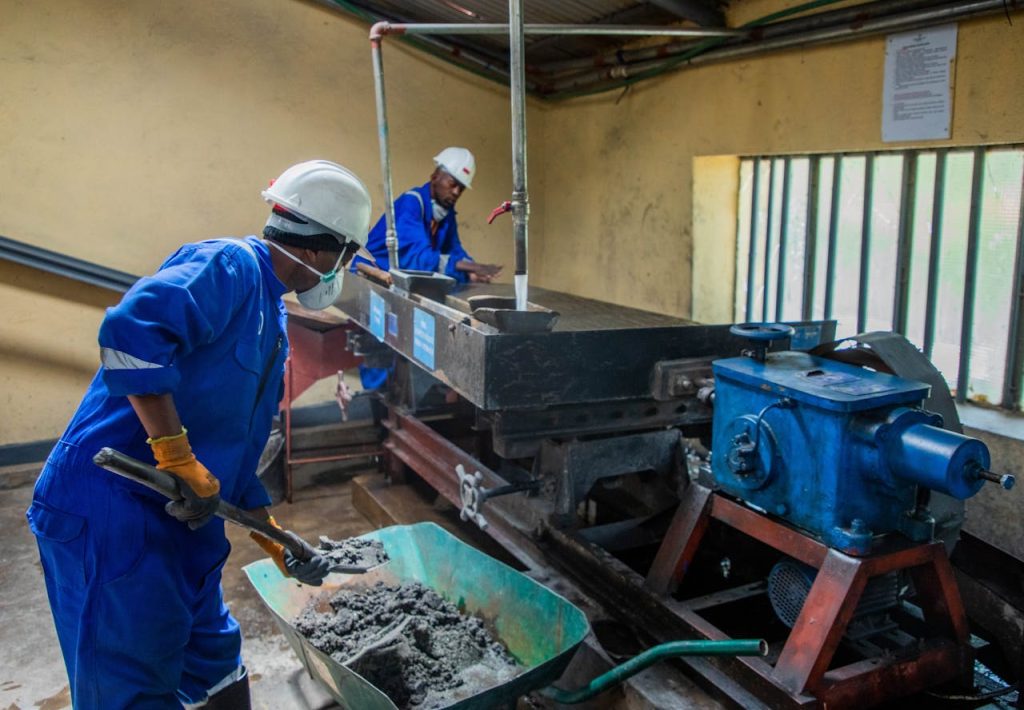
The Guinean government is actively moving away from purely artisanal mining. Under the 2026 “Mine Here, Refine Here” initiative, companies that invest in semi-industrial or industrial washing plants rather than traditional manual methods qualify for specialized customs exemptions on heavy machinery and sorting technology.
Strategic Opportunities: Industrialization and Value Addition
The current gap in the market is not the lack of diamonds, but the lack of modern processing capacity.
Moving from Alluvial to Kimberlite
Most production in Guinea has historically been alluvial (surface-level). However, 2026 is seeing a surge in “Primary Deposit” exploration. Identifying and mining the kimberlite pipes that originally “fed” the rivers is where the massive, multi-decade scale lies. Investors with the technical expertise for deep-earth sampling are finding a welcoming environment in the Siguiri and Faranah regions.
Local Sorting and Valuation
A significant portion of the value of a diamond is captured during the sorting and valuation phase. The government is currently encouraging the establishment of local sorting centers. By partnering with Yes! Invest in Guinea, investors can navigate the requirements for setting up these mid-stream facilities, ensuring they capture more margin before the stones even leave the country.
ESG and Responsible Mining in 2026
Modern Diamond Mining is as much about social impact as it is about geological extraction. In 2026, the most successful projects are those that integrate Environmental, Social, and Governance (ESG) principles from day one.
Water Management and Land Rehabilitation
Diamond washing requires significant water usage. In 2026, permits are increasingly tied to “Closed-Loop” water systems that minimize runoff and prevent the siltation of local rivers. Furthermore, progressive miners are implementing “Concurrent Rehabilitation,” where mined-out alluvial pits are immediately transformed into fertile agricultural land for local communities.
Formalizing the Artisanal Sector
Joint ventures between industrial firms and local artisanal cooperatives are a rising trend. By providing local miners with better safety gear and more efficient washing technology, industrial firms can secure a steady supply of high-quality stones while lifting local living standards a “win-win” that is highly regarded by the Ministry of Mines and Geology.
Frequently Asked Questions (FAQ)
1. What is the typical diamond grade in Guinea?
While it varies by basin, many Guinean alluvial projects yield high-quality gemstones with a significant percentage being over 1 carat. The price-per-carat in Guinea is historically higher than the global average due to the purity of the stones.
2. Can foreign investors own a diamond export license?
Yes, foreign companies can apply for an export license, provided they meet the Kimberley Process requirements and have a registered local entity (usually a SARL).
3. How has the Simandou project affected diamond mining?
The massive infrastructure built for Simandou (rail and roads) has made the previously remote diamond regions of the southeast much more accessible, drastically lowering the logistics costs for transporting fuel and heavy machinery.
4. What is the tax rate for diamond exports?
Export taxes are structured to be competitive within the West African region. Specific tax holidays are often available for companies that invest in local processing and sorting facilities.
5. How does Yes! Invest in Guinea assist in the gemstone sector?
We provide “End-to-End” support, from identifying prospective concessions and performing due diligence on land titles to facilitating meetings with the CPDM and ensuring your project is fully compliant with 2026 regulations.
Conclusion: Securing the Brilliance of Guinea’s Future
The 2026 outlook for Diamond Mining in Guinea is one of professionalization and profit. For the investor who understands that the “easy” alluvial days are evolving into a structured industrial era, the rewards are immense. Guinea offers more than just carats; it offers a transparent, regulated, and geologically rich environment where gemstones can be a pillar of a diversified portfolio.
As the world seeks ethically sourced, high-quality diamonds, Guinea stands ready to fill the void. The question is no longer if there are diamonds in Guinea, but who will be the ones to apply the modern technology needed to bring them to the global stage.
Ready to explore the gems of West Africa? At Yes! Invest in Guinea, we are your local strategic partner. We bridge the gap between global mining standards and Guinean geological potential. Let us help you navigate the licensing, logistics, and legalities of your diamond venture.
Contact Yes! Invest in Guinea today to receive our 2026 Gemstone Investment Brief.