The global transition toward sustainable power has placed a bright spotlight on West Africa, and specifically on the Republic of Guinea. Often referred to as the “Water Tower of West Africa,” Guinea is not just a mining powerhouse but a sleeping giant in the renewable energy landscape. For those looking at Guinea Energy Investments, the convergence of untapped natural resources and a proactive regulatory environment presents a generational opportunity.
In this article, we explore why Guinea’s energy sector is the next frontier for institutional capital, focusing on its massive hydropower capacity and the burgeoning portfolio of solar and wind projects.
The Strategic Importance of Guinea’s Energy Landscape
Energy is the backbone of Guinea’s ambitious “Vision 2040” plan. As the world’s leading exporter of bauxite and a major player in iron ore, the country’s industrial growth is inextricably linked to its power generation capacity. However, the government is moving away from fossil fuel dependency, pivoting instead toward a green energy mix that promises long-term sustainability and lower operational costs for industrial giants.
A Hub for Regional Power Export
Guinea is not just looking to satisfy domestic demand. Through the West African Power Pool (WAPP), Guinea is positioning itself as a net exporter of clean energy to neighboring nations like Senegal, Mali, and Guinea-Bissau. This regional integration adds a layer of security for investors, as the market for Guinean kilowatt-hours extends far beyond its national borders.
Unlocking the Hydropower Potential of the “Water Tower”
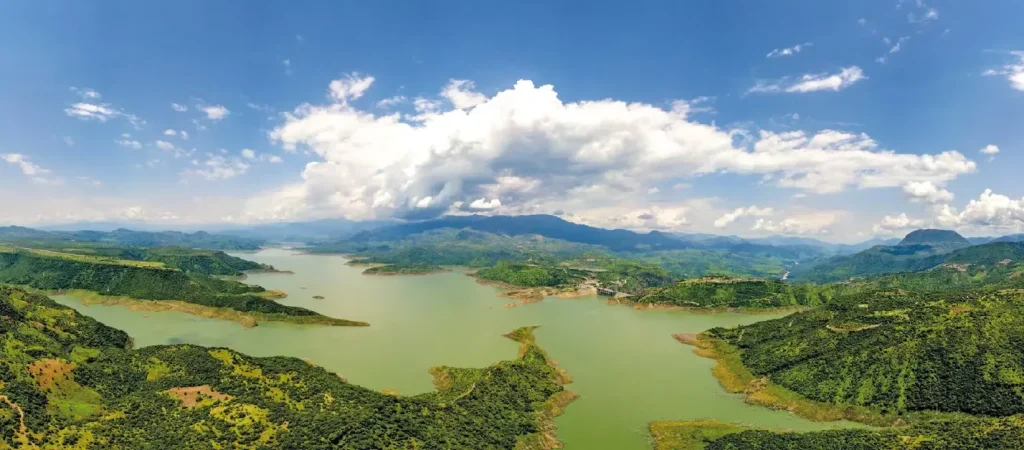
The most compelling argument for Guinea Energy Investments lies in its hydrology. With over 1,200 rivers and a unique mountainous topography, the country holds an estimated technical hydropower potential of over 6,000 MW.
Major Existing and Ongoing Projects
- The Souapiti Hydropower Station (450 MW): Already a cornerstone of the national grid, Souapiti has doubled the country’s power capacity, proving that large-scale infrastructure projects are not just feasible but highly productive in the Guinean climate.
- The Kaléta Dam (240 MW): A precursor to Souapiti, this project demonstrated the successful partnership between the Guinean government and international contractors, providing a blueprint for future PPP (Public-Private Partnership) models.
- The Amaria Project: Currently under development, this project aims to support the energy-intensive aluminum smelting industry, showcasing how energy investments directly feed into the mining value chain.
Small and Medium Hydropower (SHP) Opportunities
While “mega-dams” capture headlines, there is a massive, underserved market for small and medium-scale hydropower plants. These projects are ideal for providing localized power to remote mining sites and rural communities, offering faster ROI and lower environmental footprints for boutique investment firms.
Beyond Water: Diversifying with Solar and Wind
While hydropower is the primary driver, Guinea is diversifying its portfolio to mitigate seasonal rainfall variability. The year 2026 marks a pivotal shift as the government rolls out new incentives for non-hydro renewables.
The Solar Surge
Guinea enjoys high solar irradiation levels, particularly in the northern and eastern regions.
- The Khoumagueli Solar Project: This 40 MW project is one of Guinea’s first grid-connected solar plants. It is designed to work in tandem with hydropower—saving water in reservoirs during the day by using solar power and switching to hydro at night.
- Decentralized Solar Solutions: There is a growing demand for “Mini-Grids” in rural areas. Investors focusing on off-grid technology will find a welcoming market supported by international development grants.
Wind and Hybrid Systems
Early feasibility studies indicate significant wind potential along the coastal regions and in the Fouta Djallon highlands. The current trend for Guinea Energy Investments is moving toward “Hybrid Projects”—combining wind, solar, and battery storage to ensure a 24/7 stable power supply for industrial users.
Why Invest Now? The Regulatory and Economic Climate
The Guinean government has implemented several reforms to make the energy sector more attractive to foreign direct investment (FDI).
Key Incentives for Investors:
- Tax Exemptions: Significant VAT and customs duty exemptions for the import of renewable energy equipment.
- Guaranteed Off-take Agreements: The national utility, Electricité de Guinée (EDG), is undergoing modernization to ensure bankable Power Purchase Agreements (PPAs).
- Public-Private Partnership (PPP) Law: A robust legal framework that protects investor rights and provides clear paths for international arbitration.
The Mining-Energy Nexus
The most significant “guaranteed” demand comes from the mining sector. With the Simandou iron ore project coming online, the demand for stable, high-voltage power is skyrocketing. Investors who can bridge the gap between energy production and mining needs stand to gain the most.
FAQs about Guinea Energy Investments
1. What is the total hydropower potential in Guinea?
Guinea has a theoretical potential of over 6,000 MW across its various river basins, though only about 25-30% of this is currently exploited.
2. Can foreign investors own energy projects in Guinea?
Yes, the Guinean investment code allows for 100% foreign ownership in many sectors, and the PPP framework specifically encourages international participation in energy infrastructure.
3. How does the government support renewable energy?
The government offers fiscal incentives, including tax holidays and reduced import duties for renewable technologies, alongside a commitment to the West African Power Pool for energy export.
4. Is solar energy viable in a country known for rain?
Absolutely. While Guinea has a rainy season, its solar irradiation levels remain high enough to make solar a perfect complementary source to hydropower, especially in the northern regions.
5. How can I start an investment process in Guinea?
The best way to start is by partnering with local experts. Our team at Yes! Invest in Guinea provides end-to-end consultancy, from legal compliance to project site selection.
Conclusion: Powering the Future of West Africa
The transition to green energy is no longer a choice; it is a global mandate. For the savvy investor, Guinea Energy Investments represent a rare combination of high demand, abundant natural resources, and a government hungry for partnership. Whether it is the vast potential of the Konkouré River or the sun-drenched plains of Upper Guinea, the opportunities are as vast as the landscape itself.
Ready to explore the energy frontier? At Yes! Invest in Guinea, we specialize in connecting international capital with high-impact projects in West Africa. Our deep local knowledge and network of government stakeholders ensure that your investment is not just profitable, but sustainable.
Contact Yes Invest in Guinea today to receive a curated portfolio of energy opportunities.