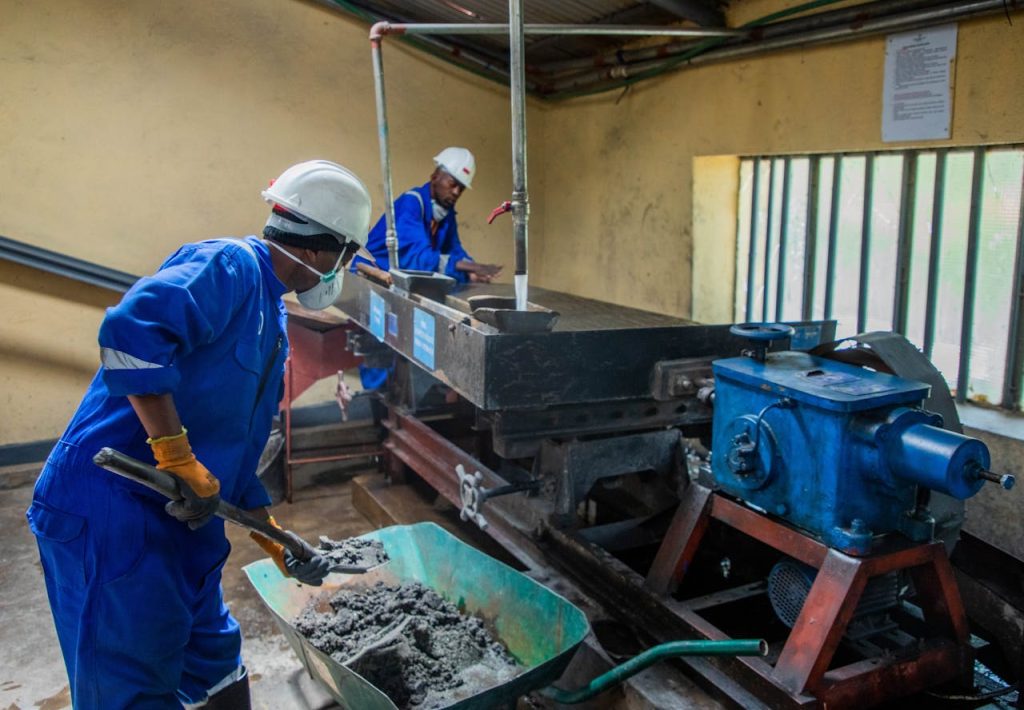
In the rapidly evolving economic landscape of West Africa, the Republic of Guinea is proving to be a land of immense opportunity, not just for multi-billion dollar mining conglomerates, but also for small and medium-sized enterprises (SMEs) and professional cooperatives. For many entrepreneurs, the challenge of entering a new market lies in the scale of resources required. This is where the GIE Guinea (Groupement d’Intérêt Économique) model becomes a game-changer. By allowing separate entities to pool their resources, expertise, and capital, the Economic Interest Group structure facilitates collaborative business in Guinea, making market entry more efficient and less risky.
In 2026, as Guinea modernizes its commercial sectors, the GIE framework has become the preferred vehicle for local and international partnerships in agribusiness, artisanal mining services, and regional logistics. This article explores the legal foundations of the GIE, the strategic benefits of collaborative business, and how you can leverage this structure to succeed in the Guinean market.
What is an Economic Interest Group (GIE) in Guinea?
The GIE Guinea is a unique legal hybrid that sits between a partnership and a full-scale corporation. Its primary purpose is to provide the means necessary to develop the economic activity of its members and to improve or increase the results of those activities.
1. The OHADA Legal Foundation
The formation of a GIE in Guinea is governed by the OHADA (Organization for the Harmonization of Business Law in Africa) Uniform Act on Commercial Companies and Economic Interest Groups. This international treaty ensures that the GIE structure is recognized and protected across 17 African nations, providing a high level of legal security for cross-border collaborations.
2. Purpose and Flexibility
The GIE is not designed to make profits for itself, but rather to facilitate the profit-making activities of its members. This makes it an ideal structure for:
- Joint Marketing and Export: Multiple small farmers pooling their produce to meet international export volumes.
- Shared Infrastructure: Mining service providers sharing heavy machinery or laboratory facilities.
- Joint Purchasing: Businesses coming together to buy raw materials at wholesale prices, increasing their collective bargaining power.
Strategic Benefits of Collaborative Business in Guinea
Why are more investors turning to the GIE Guinea model in 2026? The advantages are rooted in flexibility and operational efficiency.
No Minimum Capital Requirement
One of the most significant barriers to business setup is often the initial capital injection. Under OHADA law, a GIE can be formed without any minimum share capital. This allows partners to focus their liquid assets on operations rather than tying them up in statutory requirements.
Simplified Governance and Management
A GIE is managed by one or more administrators, who can be individuals or legal entities. The members have significant freedom to draft the “Contract of Grouping” to suit their specific operational needs, allowing for a more agile decision-making process compared to a traditional Société Anonyme (SA).
Tax Transparency
In many jurisdictions under the OHADA umbrella, a GIE is treated with tax transparency. This means the group itself is not taxed; instead, the profits or losses flow directly through to the members, who are then taxed according to their own fiscal status. This prevents the “double taxation” often associated with corporate structures.
Key Sectors for GIE Collaboration in 2026
Agribusiness and Food Security
Guinea’s “Water Tower of Africa” status makes it a hub for agriculture. GIEs are increasingly used by agricultural cooperatives to invest in solar-powered irrigation systems or cold-chain logistics that would be too expensive for a single farm to manage alone.
Mining Support and Subcontracting
As Guinea enforces “Local Content” laws, international firms are forming GIEs with local Guinean companies. This allows the international partner to provide technical expertise while the local partner provides market access and compliance, creating a win-win scenario for large-scale mining tenders.
Artisanal Gold and Diamond Exports
Small-scale miners are forming GIEs to formalize their operations, ensuring they can meet the OECD Due Diligence Guidance for responsible mineral supply chains, which is essential for exporting gold to global markets.
Roadmap to Forming a GIE Guinea
- Identify Strategic Partners: Find businesses or individuals whose goals align with yours.
- Draft the GIE Contract: Define the purpose, duration, and management rules. This document must be notarized in Guinea.
- Registration with the RCCM: Register the group with the Registre du Commerce et du Crédit Mobilier. This gives the GIE its legal personality.
- Obtain Tax Identification (NIF): Even if tax-transparent, the GIE must be registered with the tax authorities for compliance.
- Operational Launch: Open a group bank account and begin the shared economic activity.
FAQ: GIE Guinea
- How many members are required to form a GIE?
A GIE requires a minimum of two members. These can be individuals, existing companies, or even a mix of both.
- Is a GIE responsible for its own debts?
While the GIE has its own legal personality, its members are jointly and severally liable for the debts of the group. This is why choosing the right partners is crucial in a GIE.
- Can a GIE be converted into a company?
Yes. A GIE can be transformed into a commercial company (like an SARL) without creating a new legal entity, provided all legal transformation procedures are followed.
- Can foreign companies join a Guinean GIE?
Absolutely. Foreign entities can join a GIE to partner with local firms, which is a popular strategy for fulfilling local content requirements in the mining and energy sectors.
- How does Yes! Invest Guinea facilitate GIE formation?
Yes! Invest Guinea provides expert liaison services, from drafting the grouping contract to navigating the APIP registration “one-stop shop” and ensuring full compliance with OHADA laws.
Conclusion: Strength in Unity
In the competitive landscape of 2026, the GIE Guinea represents a sophisticated tool for anyone looking to enter the West African market. Economic Interest Groups (GIE) Guinea: Collaborative Business in Guinea provides the framework for shared risk, shared costs, and ultimate shared success. By working together, businesses can achieve a scale that would be impossible alone, turning Guinea’s vast potential into tangible growth.
The era of the “solo entrepreneur” is giving way to the era of the “strategic collaborator.” Is your business ready to join forces in the heart of West Africa?
Scale Your Vision with Yes! Invest Guinea
At Yes! Invest Guinea, we believe in the power of partnership. Our team is dedicated to helping you find the right collaborators and the right legal structures to ensure your venture thrives.
Contact Yes! Invest Guinea today to begin your GIE formation and collaborative business journey.