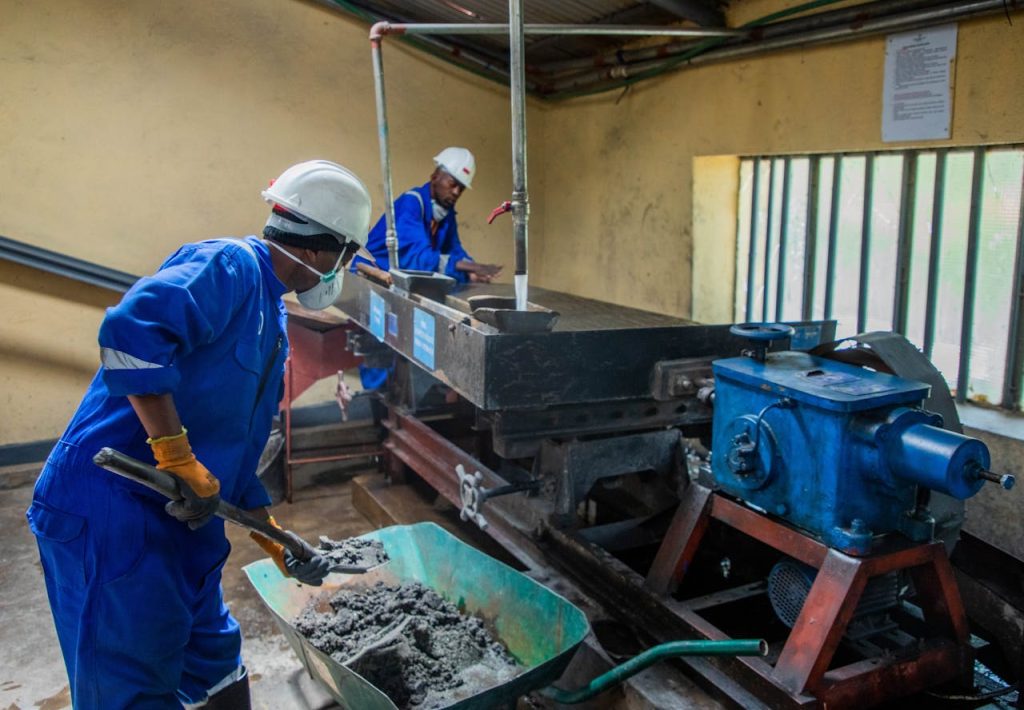
The global quest for food security in 2026 has transformed a specific group of minerals into strategic assets: soil nutrients. While the Republic of Guinea is famously recognized as a bauxite giant, the recent shift in the global industrial landscape has turned the spotlight toward Phosphate Mining Guinea. As an essential component of high-quality fertilizers, phosphate is the “engine” of the modern agricultural revolution. For institutional investors and chemical manufacturers, Phosphate Mining: Fertilizer Production in Guinea represents a massive opportunity to tap into a high-demand sector while solving one of Africa’s most pressing challenges food sovereignty.
With a modernized mining code and a government-led push for downstream industrialization, Guinea is no longer just exporting raw materials. The nation is positioning itself as a regional hub for fertilizer manufacturing, leveraging its natural mineral wealth and strategic Atlantic access. This article explores the geological potential of Guinea’s phosphate reserves, the fiscal roadmap for production, and why 2026 is the prime window for market entry.
The Strategic Importance of Phosphate in 2026
The world’s population is continuing to rise, yet the amount of arable land is finite. In 2026, the only way to meet global food demand is through increased crop yields, which is impossible without phosphorus.
1. Global Supply Chain Shifts
Recent geopolitical tensions have highlighted the vulnerability of traditional phosphate supply chains. Manufacturers are diversifying away from restricted markets, seeking jurisdictions that offer both mineral abundance and a pro-business climate. Guinea’s under-explored phosphate deposits provide a stable, high-grade alternative. According to the International Fertilizer Association (IFA), localized fertilizer production is critical for reducing the cost of food in West Africa, where import costs currently eat into 30% of agricultural margins.
2. The African “Green Revolution”
The African Continental Free Trade Area (AfCFTA) has created a unified market of 1.3 billion people. Guinea, situated at the gateway of West Africa, is perfectly positioned to supply fertilizers to the massive agricultural belts of Nigeria, Mali, and Senegal. Investing in Agribusiness Niche Guinea projects alongside mining ensures a vertical integration that captures value from the pit to the plate.
Exploring Guinea’s Phosphate Potential: Geological Frontiers
In 2026, modern exploration techniques have identified significant sedimentary phosphate formations in the northern and coastal regions of Guinea.
1. Sedimentary Phosphate Deposits
These deposits are often high in phosphorus pentoxide ($P_2O_5$) content and are situated in layers that allow for cost-effective, large-scale open-pit mining. Unlike igneous phosphate, sedimentary varieties are generally easier to process into phosphoric acid, the precursor for Diammonium Phosphate (DAP) and Monoammonium Phosphate (MAP) fertilizers.
2. New Discoveries and AI Exploration
Using AI-driven predictive modeling, the Ministry of Mines has identified “hotspots” that mirror world-class deposits in neighboring nations. These New Discoveries in Guinea are currently available for exploration permits, offering high “Alpha” potential for firms that move quickly.
Why Invest in Phosphate Mining in Guinea Now?
The 2026 regulatory environment has been specifically calibrated to encourage “Integrated Projects” those that mine the mineral and process it locally.
1. Downstream Processing Incentives
Under the 2026 Mining Code update, companies that establish Manufacturing and Industrialization units for fertilizer production enjoy:
- Royalties Reduction: A 50% reduction in mineral royalties for any phosphate processed into fertilizer within Guinea.
- Corporate Tax Holidays: Up to 12 years of tax exemption for “Integrated Fertilizer Hubs.”
- Export Duty Waivers: 100% exemption on duties for fertilizers exported to AfCFTA member states.
2. Synergistic Infrastructure
Phosphate mining is energy-intensive. Fortunately, Guinea’s surplus of hydroelectric power from projects like Souapiti and Kaléta provides a cheap, renewable energy source for chemical plants. Furthermore, the expansion of the Morebaya and Kamsar ports, supported by Transport and Logistics infrastructure, allows for the bulk export of processed fertilizers to the global market.
3. Legal Security via OHADA
For international investors, the safety of their capital is paramount. Guinea’s membership in the OHADA framework and adherence to the Extractive Industries Transparency Initiative (EITI) provides a transparent, standardized legal environment. This ensures that mining titles and commercial contracts are protected by international commercial laws.
Roadmap for Fertilizer Production Success
- Concession Acquisition: Work with Yes! Invest Guinea to identify high-prospectivity phosphate blocks.
- Feasibility for Integrated Plants: Conducting technical studies for ammonia-phosphate blending. Ammonia can be produced locally using “Green Hydrogen” from Guinea’s hydropower, as explored in recent Renewable Energy Projects.
- Environmental and Social Impact (ESG): Adhering to the IFC Performance Standards to ensure “Green Fertilizer” certification, which attracts premium pricing in European and North American markets.
- Local Market Integration: Partnering with local agricultural cooperatives to secure a “Domestic Base Demand” for your products.
FAQ: Phosphate Mining Guinea
- Is phosphate mining in Guinea environmentally sustainable?
In 2026, all new mining projects must include a “Restoration Bond.” Phosphate mining in Guinea is being developed with modern land-reclamation techniques that return mined areas to Sustainable Forestry or agricultural use post-extraction.
- Can foreign investors own 100% of a fertilizer plant?
Yes. While the State typically holds a 15% non-dilutable interest in the mining title, the processing plant can be 100% foreign-owned.
- What is the domestic demand for fertilizer in Guinea?
Guinea’s agricultural sector is growing at 6% annually. There is a massive internal demand for NPK fertilizers to support Vanilla Cultivation and Spice Production.
- How does the quality of Guinean phosphate compare to global benchmarks?
Initial assays from 2026 show that Guinean phosphate is low in cadmium and other heavy metals, making it ideal for the strict “Clean Fertilizer” regulations in the EU.
- How can Yes! Invest Guinea assist my mining firm?
Yes! Invest Guinea facilitates the entire entry process securing exploration licenses, conducting Legal and Regulatory Assistance, and connecting you with Government and Institutional Liaison bodies.
Conclusion: Fertilizing the Future of Global Trade
The Republic of Guinea is ready to move from a mineral-extracting nation to an industrial-producing powerhouse. Phosphate Mining: Fertilizer Production in Guinea is more than an investment in rocks; it is an investment in the global food supply chain. By combining world-class geology with renewable energy and a pro-industry government, Guinea offers the perfect “formula” for fertilizer investment success.
In 2026, the soil of the world needs what the soil of Guinea holds. The investors who bridge that gap today will lead the agricultural economy of tomorrow.
Lead the Agricultural Revolution with Yes! Invest Guinea
At Yes! Invest Guinea, we are the strategic bridge to your success in West Africa. From geological data to the final export permit, our team provides the local intelligence and institutional access you need to thrive.
Contact Yes! Invest Guinea today to receive our 2026 Phosphate & Fertilizer Investment Prospectus.