For centuries, the Republic of Guinea has been a cornerstone of the global mineral trade. While the world’s eyes are frequently fixed on its massive bauxite and iron ore deposits, a sparkling new frontier is emerging in 2026: the high-value gemstone sector. Traditionally, Guinea has been an exporter of raw, uncut stones diamonds, sapphires, and tourmalines leaving the significant profits of “finishing” to global hubs like Antwerp, Surat, or Tel Aviv. However, the tide is turning. Gemstone Processing is now the primary focus of the national industrial strategy, offering a lucrative “Blue Ocean” for investors ready to transition from simple extraction to high-margin value addition.
In 2026, the Guinean government is aggressively incentivizing the “Downstream” mining sector. The goal is clear: to ensure that the journey from the mine to the luxury jewelry boutique begins and ends with Guinean expertise. This article explores the strategic landscape of Gemstone Processing: Value-Added Mining in Guinea, the technological requirements for modern lapidary success, and why this niche agribusiness-adjacent sector is the next big win for frontier investors.
The Untapped Potential of Guinea’s Gemstones
Guinea’s geological profile, particularly in the Banankoro and Kerouane regions, is legendary for yielding stones of exceptional clarity and color. However, exporting raw stones is an economic leakage.
1. Moving Beyond Raw Exports
When a gemstone is exported in its raw, “rough” state, the host country captures only a fraction of its final market value. By establishing local Gemstone Processing facilities incorporating cutting, sawing, and polishing (lapidary) investors can increase the value of a single stone by 300% to 500%. According to the Natural Diamond Council, the value-added segment of the diamond industry is the most resilient to market fluctuations.
2. Diversification of the Mineral Portfolio
While Bauxite remains the “bread and butter” of the economy, gemstones offer a high-value, low-volume alternative. Diamonds from the Forest Region are world-renowned, but 2026 has seen a surge in interest for colored gemstones like pink and green tourmalines, which are increasingly sought after by sustainable luxury brands in Europe and North America.
Strategic Opportunities in Gemstone Processing 2026
The investment landscape for gemstone value-addition in Guinea is currently shaped by three primary opportunities.
1. Establishing Modern Lapidary Centers
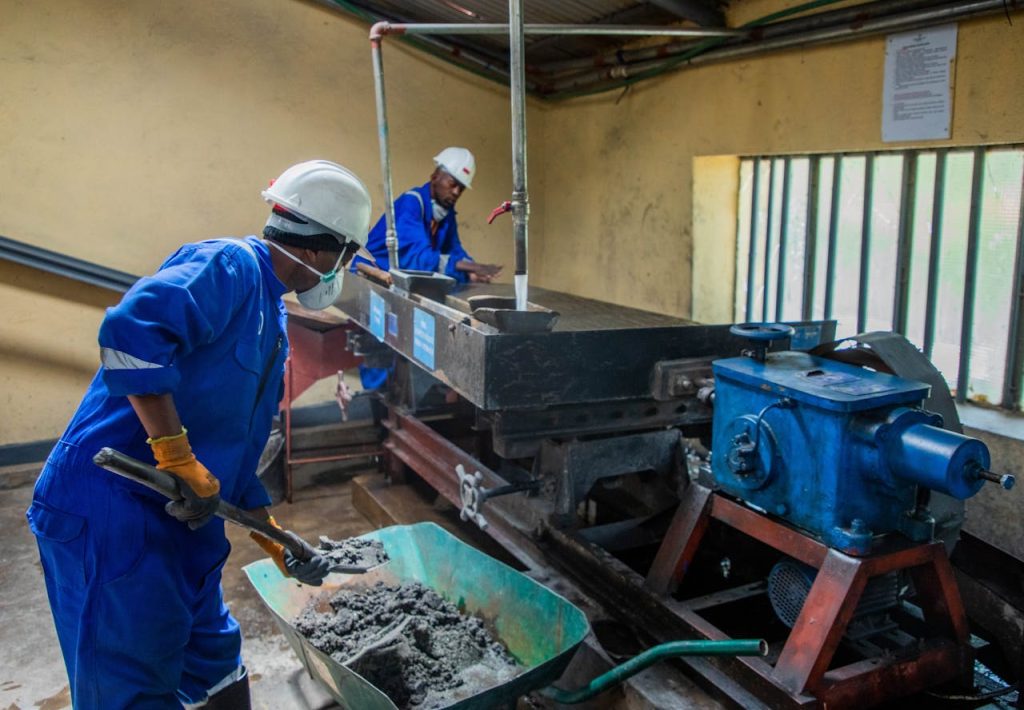
The “Master Plan” for 2026 involves the creation of state-of-the-art cutting and polishing centers. These facilities utilize laser-cutting technology and computer-aided design (CAD) to maximize the “yield” of a rough stone.
- The Opportunity: Investors can set up centralized processing hubs that serve multiple small-to-medium mining cooperatives, providing high-precision finishing services that meet international GIA (Gemological Institute of America) standards.
2. Gemological Certification and Laboratories
Trust is the currency of the gemstone trade. There is a massive demand for independent, internationally accredited gemological laboratories within Guinea.
- The Opportunity: Establishing a “Certified in Guinea” laboratory that provides laser-inscription, origin reports, and digital “Birth Certificates” for stones using blockchain technology. This ensures the Traceability and Transparency that modern ESG-conscious consumers demand.
3. High-End Jewelry Manufacturing
The final step in the value chain is the transformation of polished stones into finished jewelry. By combining Guinean gemstones with locally mined gold, investors can create a “Made in Guinea” luxury brand targeting the elite markets of the UAE, Qatar, and China.
Why Invest in Guinea’s Downstream Mining Now?
The 2026 regulatory environment has been specifically “polished” to favor industrial value-addition.
1. Fiscal Incentives for Processing
Under the 2026 Investment Code, projects focused on Gemstone Processing are categorized as “Strategic Industrial Ventures.” Benefits include:
- Customs Duty Waivers: 100% exemption on the importation of high-tech cutting, polishing, and laboratory equipment.
- Export Duty Reductions: Lower export taxes for finished (polished) stones compared to raw stones, making Guinean finished products highly competitive on the global stage.
- Tax Holidays: Corporate income tax exemptions for the first 5 to 10 years of operation for processing plants located in Special Economic Zones (SEZs).
2. Proximity to Source
Unlike traditional cutting hubs, a processing facility in Guinea is located at the source of the material. This drastically reduces the “security and transport” costs associated with moving high-value rough stones across international borders. It also allows for “Direct-from-Mine” relationships, ensuring a steady supply of the best material before it hits the open market.
3. Legal Security and OHADA
The protection of high-value assets and intellectual property (such as proprietary cutting styles) is guaranteed under the OHADA framework. This provides a transparent, standardized legal environment for joint ventures between international investors and local mining title holders.
Roadmap for Successful Lapidary Entry
- Strategic Partnership with Cooperatives: Secure “First-Right” agreements with established artisanal and small-scale mining (ASM) cooperatives in the Forest Region.
- Technological Integration: Invest in automated polishing systems to ensure consistency. In 2026, precision is more important than volume.
- Labor Force Development: Partner with Yes! Invest Guinea to access Vocational Training Centers focused on jewelry design and gemology.
- Global Market Positioning: Use digital “Blockchain Certificates” to market your stones as “Conflict-Free” and “Ethically Sourced from Guinea,” appealing to the Gen-Z and Millennial luxury demographic.
FAQ: Gemstone Processing Guinea
- What types of gemstones are most abundant in Guinea?
Guinea is most famous for its high-quality diamonds (often of “investment grade”). However, the country also possesses significant deposits of sapphires, rubies, tourmalines, and quartz.
- Can a foreign investor own a processing plant in Guinea?
Yes. Guinea allows 100% foreign ownership of industrial processing facilities. Many investors choose to operate within a Special Economic Zone (SEZ) to maximize tax benefits.
- Is the energy supply stable enough for high-tech laser cutting?
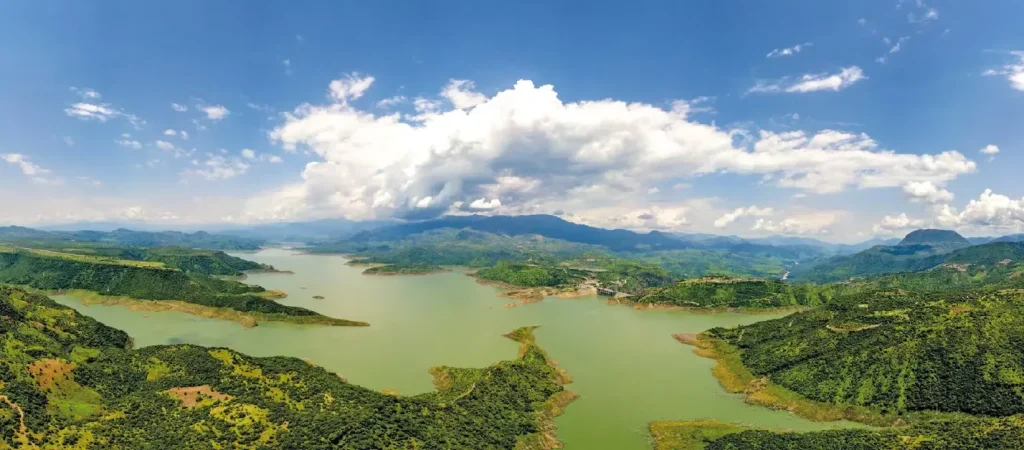
Yes. In 2026, the expansion of the Smart Grid and the completion of major hydroelectric dams have stabilized the industrial energy supply, particularly in designated industrial zones.
- How does the government prevent the “smuggling” of raw stones?
The government has implemented a “Digital Registry” for all extracted stones. By incentivizing local processing through lower taxes, it is now more profitable to process stones legally within Guinea than to smuggle them raw.
- How can Yes! Invest Guinea assist my gemstone project?
Yes! Invest Guinea provides institutional support, including identifying mining partners, securing land for processing plants, and facilitating the export permits required for international shipping.
Conclusion: From the Earth to the Elite
The future of Guinean mining is no longer just about the volume of dirt moved; it is about the brilliance of the finished product. Gemstone Processing: Value-Added Mining in Guinea represents the most sophisticated and high-yield frontier in the West African resource sector. In 2026, the tools are ready, the stones are waiting, and the legal framework is solid.
The path to luxury begins in the deep red soil of Guinea. The investors who build the factories to refine that beauty today will lead the global market tomorrow.
Spark Your Investment with Yes! Invest Guinea
At Yes! Invest Guinea, we specialize in turning raw potential into polished success. From the mine site to the global market, our team is your strategic partner in the gemstone revolution.
Contact Yes! Invest Guinea today to receive our 2026 Gemstone & Downstream Mining Market Analysis.