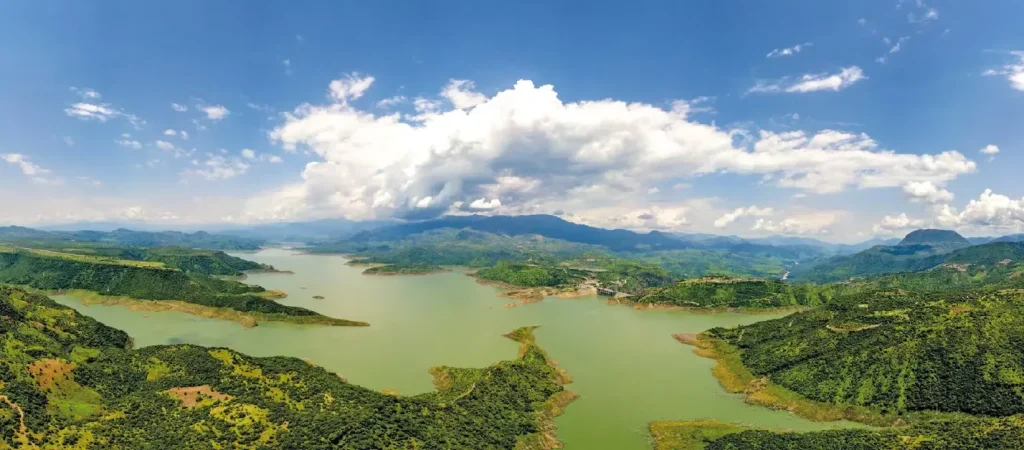
The global energy landscape is undergoing a paradigm shift, moving away from centralized fossil fuel systems toward decentralized, renewable-driven architectures. In West Africa, the Republic of Guinea is at the forefront of this transition. Known as the “Water Tower of Africa” for its immense hydropower potential, Guinea is now integrating advanced Energy Storage Guinea technologies to stabilize its grid and maximize the utility of its renewable assets.
As of 2026, the integration of Battery Energy Storage Systems (BESS) has become a strategic priority for the Guinean government and international investors alike. Without robust storage solutions, the intermittent nature of solar and the seasonal fluctuations of hydropower cannot be fully harnessed. This article explores the burgeoning market for energy storage in Guinea, the regulatory incentives for investors, and how battery projects are anchoring the country’s renewable future.
The Critical Role of Energy Storage in Guinea’s Power Sector
Guinea’s energy strategy is built on a foundation of renewables, but the missing link has long been the ability to store surplus energy for use during peak demand or low-generation periods.
1. Balancing the Hydropower Harvest
While Guinea’s dams provide significant baseload power, their output is highly dependent on seasonal rainfall. Energy Storage Solutions allow for the “shaving” of peak production during the rainy season, storing excess energy in large-scale battery arrays to be deployed during the dry season or daily peak hours. This ensures a consistent power supply for mining operations and industrial zones.
2. Enabling Solar Scaling
The Guinean plateaus offer high solar irradiation levels, ideal for large-scale PV (Photovoltaic) farms. However, solar energy is only available during daylight hours. Integrating Energy Storage Guinea solutions allows solar projects to provide “firm” power 24/7, making renewable energy more attractive to heavy industrial off-takers who require continuous electricity.
Strategic Investment Opportunities in 2026
The year 2026 marks a turning point for energy infrastructure in Guinea, with several high-value entry points for international capital and technology providers.
Utility-Scale Battery Energy Storage Systems (BESS)
The government is actively seeking Independent Power Producers (IPPs) to develop utility-scale BESS projects near major substations. These projects provide “Ancillary Services,” such as frequency regulation and spinning reserves, which are critical for the stability of the national grid (EDG). According to the International Renewable Energy Agency (IRENA), energy storage is the “great enabler” for regional power pools like the West African Power Pool (WAPP).
Micro-Grid and Mini-Grid Integration
In rural areas, where the national grid has yet to reach, decentralized mini-grids are the primary solution. These systems rely almost entirely on battery storage to remain viable. Investors in Battery Projects in Guinea Renewables can find lucrative opportunities in developing integrated “Solar + Storage” kits for rural clinics, schools, and agribusiness processing hubs.
Industrial “Behind-the-Meter” Storage
Mining giants operating in Guinea are under increasing pressure to meet global ESG (Environmental, Social, and Governance) standards. Many are looking to replace their expensive and polluting diesel generators with hybrid renewable systems. There is a massive market for industrial-scale storage units that can provide high-surge power for mining machinery while reducing carbon footprints.
The Regulatory and Legal Framework for Energy Investors
Guinea has modernized its energy laws to accommodate decentralized and stored energy solutions.
- OHADA Compliance: As a member of the OHADA framework, Guinea offers a standardized and predictable legal environment for commercial contracts and international arbitration.
- Tax and Customs Incentives: Under the 2026 Investment Code, renewable energy equipment, including deep-cycle batteries and inverters, is eligible for significant customs duty exemptions and VAT reductions.
- Direct Power Purchase Agreements (PPAs): New regulations allow IPPs to sign direct PPAs with industrial mining clients, ensuring a stable, foreign-currency-denominated revenue stream for storage operators.
Technical Trends: From Lead-Acid to Lithium and Beyond
The technological landscape for Energy Storage Guinea is evolving rapidly to meet the challenges of a tropical climate.
The Rise of Lithium Iron Phosphate (LiFePO4)
For Guinean projects, LiFePO4 has become the industry standard. Its high thermal stability and long cycle life make it ideal for the high-ambient-temperature environments found in Upper Guinea and the Forest Region.
Flow Batteries for Long-Duration Storage
For utility-scale projects requiring 8+ hours of discharge, vanadium flow batteries are being explored. Unlike lithium, these systems do not degrade over time and are non-flammable, offering a lower Total Cost of Ownership (TCO) for multi-decadal infrastructure projects.
Navigating the Market with Yes! Invest Guinea
Investing in Guinea’s energy frontier requires more than just capital; it requires deep local intelligence.
- Site Identification: We identify strategic nodes near existing hydropower dams or planned solar parks for optimal storage placement.
- Regulatory Liaison: We facilitate meetings with the Ministry of Energy, Hydraulics, and Hydrocarbons to ensure your project aligns with the national master plan.
- Local Partnership: Yes! Invest Guinea connects you with vetted local technical firms for O&M (Operations and Maintenance), ensuring your assets are protected and efficient.
FAQ: Energy Storage Guinea
- Why is energy storage critical for Guinea’s mining sector?
Mining requires a 24/7 stable load. Since renewables are intermittent, battery storage allows mines to transition away from diesel, reducing costs and meeting international carbon-neutrality targets.
- Are there specific incentives for “Green Energy” storage?
Yes. Projects that integrate storage with renewable generation often qualify for “Green Bonds” and carbon credit programs, which can provide additional financial returns.
- What is the typical lifespan of battery projects in Guinea?
With modern LiFePO4 technology and proper climate-controlled enclosures, systems are expected to last 10 to 15 years, covering the primary capital recovery period of most energy investments.
- Can I export power stored in Guinea to neighboring countries?
Through the West African Power Pool (WAPP) infrastructure, there is a long-term potential for Guinea to export stored “green energy” to neighbors like Senegal, Mali, and Liberia.
- How does Yes! Invest Guinea facilitate energy storage investments?
We provide end-to-end support, from identifying bankable projects and managing the permitting process to navigating the OHADA legal framework and securing local incentives.
Conclusion: Anchoring Guinea’s Renewable Future
Guinea is standing at the threshold of a green energy revolution. By investing in Energy Storage Solutions: Battery Projects in Guinea Renewables, international investors are not just buying into a project; they are securing a foundational role in the West African energy transition.
The combination of massive hydropower, high solar potential, and a reform-driven regulatory climate makes Guinea the premier destination for energy storage capital in 2026. As the grid stabilizes and the “Green Economy” grows, those who invest in storage today will be the energy leaders of tomorrow.
Power the Future with Yes! Invest Guinea
At Yes! Invest Guinea, we specialize in bridging the gap between global energy capital and Guinean infrastructure potential. Our team is ready to help you navigate the complexities of the energy market and secure your position in the “Water Tower of Africa.”
Contact Yes! Invest Guinea today to receive our 2026 Energy Storage Sector Briefing.